
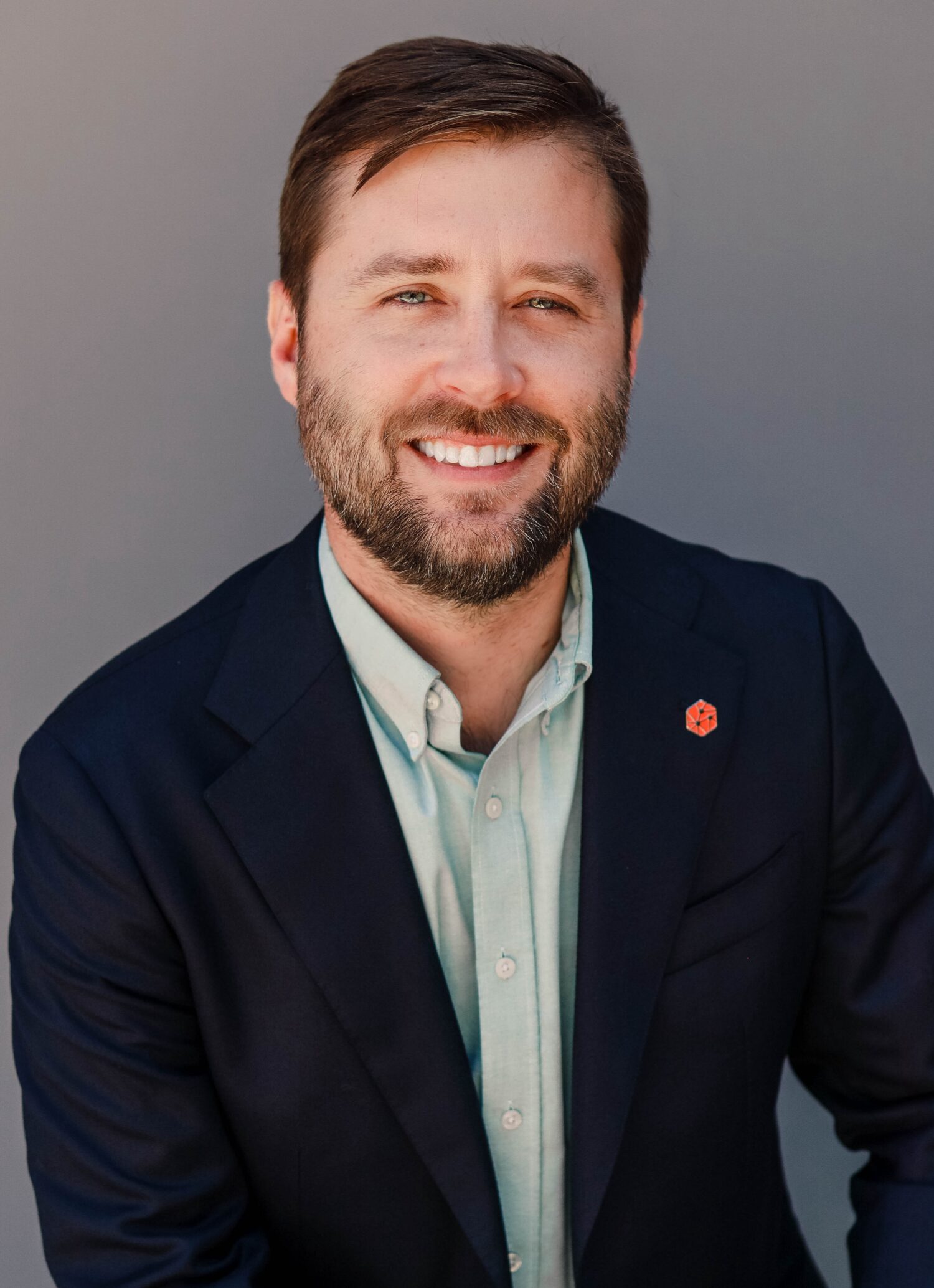
Michael Jerkins, MD, MEd, President and Co-Founder, Panacea Financial
The conversation around federal student loan caps has focused almost entirely on undergraduates. That’s understandable as undergrads are the largest borrowing population, but for medical education, the consequences of the proposed legislation may be more immediate and far less visible to both policymakers and wider audiences.
To set context, let me be specific about what’s in the bill: The legislation would cap annual federal borrowing for professional school at $50,000 and impose an aggregate lifetime limit of $257,000, including undergraduate borrowing. For students who attended an expensive four-year university before medical school, they may arrive at their first year of medical training having already hit their federal maximum. The cap doesn’t just constrain future borrowing. For some, it eliminates it entirely before they set foot in a lecture hall.
The Numbers Don’t Add Up
A four-year medical degree runs $297,745 at public schools and $408,150 at private ones for the class of 2026. Federal loans currently cover that full cost. A 2025 survey of residents and fellows found the average trainee is already carrying $296,540 in student loan debt, with some balances reaching $700,000. A cap set well below the actual cost of attendance doesn’t meet the gap; it creates one.
The signal from doctors themselves is equally stark. In a 2026 survey of physicians, dentists and veterinarians, 53% said they would not choose medicine – or weren’t sure they would – if starting their careers today under the proposed federal loan limits. Among current trainees, fewer than half said yes.
Why Private Markets Won’t Fill the Gap
The assumption embedded in this legislation is that students who exceed the federal cap can turn to private lenders. That assumption unfortunately doesn’t hold for this population.
Medical students are structurally unlike any other graduate borrower: no income, limited or no credit history, typically no co-signer, and an earnings timeline that stretches 7-11 years into the future. Traditional risk models (i.e. the ones private lenders use) penalize every one of those characteristics. They’re not designed to account for the near certainty of physician earnings post-training.
The result is that many qualified, accepted medical students will face private market rejection not because they’re poor financial bets, but because conventional underwriting can’t see around the corner of residency.
And even for those who do secure private financing, there’s a second, less-discussed consequence: private loans carry no access to Public Service Loan Forgiveness (PSLF) or income-driven repayment (IDR). For physicians who might otherwise choose to work at community health centers, rural hospitals, or not-for-profit employers and the institutions most likely to serve patients with the fewest options, private loan debt actively disincentivizes that path. The policy doesn’t just affect who becomes a doctor. It shapes where doctors end up practicing.
The private market has never been the primary mechanism for medical education financing. Survey data shows 93% of trainees with student loan debt relied at least partially on federal loans; just 34% had any private borrowing at all. The cap would force a fundamental restructuring of that relationship overnight.
Two Compounding Threats to the Physician Pipeline
The immediate risk is logistical. Medical schools admit students months before the fall semester, and most applicants approach the process with federal loan access as a baseline assumption. If the cap takes effect mid-cycle, schools could face a scenario where admitted students can’t secure adequate financing and decline or defer enrollment. Unfilled seats mid-cycle are nearly impossible to recover within the same admissions year. For institutions already operating on thin margins – particularly regional schools and historically Black medical colleges – the downstream effects could be severe.
The longer-term risk is structural. The research on physician workforce distribution is well-established: doctors from lower- and middle-income backgrounds are disproportionately likely to practice in rural and underserved communities. Those are the same students who will be least able to bridge a federal-to-private financing gap. If the cap filters out that cohort, it doesn’t just affect individuals, it directly erodes care access in the communities that most depend on primary care physicians.
This connects to a pattern that is already documented and already worsening: The makeup of the physician workforce does not reflect the general population. This policy, if enacted as proposed, would accelerate that divergence.
The Stakes for the Healthcare System
This isn’t just a student finance story. It’s a care delivery story.
A physician shortage is already documented and projected to worsen significantly over the next decade. The training pipeline is one of the few levers available to move those numbers. Policy that constricts who enters that pipeline at the front end has consequences that compound over 10, 20, and 30 years. Healthcare leaders focused on workforce sustainability should pay very close attention.
A More Thoughtful Approach
Rather than applying a blunt, uniform cap across all graduate programs, a well-designed framework would account for the actuarial reality of professional training: expected earnings, licensure requirements, the social value of the profession, and the demonstrated repayment history of its practitioners. These aren’t abstract considerations. They’re the inputs that any sound underwriting model would require.
The technology and innovation ecosystem has spent two decades learning to underwrite future value, not just present circumstances. Healthcare financing policy should be capable of the same. The question isn’t whether future physicians can afford to repay their education – history is clear that they can. The question is whether the system can see past a balance sheet to the career on the other side of it.
The students who will be most affected by this cap aren’t the ones who couldn’t see the financial path clearly. They’re the ones who saw it, chose it anyway, and now face a financing system that wasn’t designed to accommodate them.
Getting this wrong isn’t just a financial policy mistake. It’s a health policy mistake with a very long tail.
About Michael Jerkins
Michael Jerkins, M.D., M.Ed., is the president and co-founder of Panacea Financial and is also a practicing physician in Little Rock, Arkansas. After earning his bachelor’s degree in economics, he deferred his medical school acceptance to teach middle school science in the Phoenix area while also earning his master’s degree in education from Arizona State University. He then completed medical school at the University of Tennessee Health Science Center before finishing his residency at the University of Cincinnati Medical Center and Cincinnati Children’s Hospital. With a faculty position and board certifications in both internal medicine and pediatrics, Michael is able to treat patients of all ages and teach medical trainees in both inpatient and outpatient settings.