
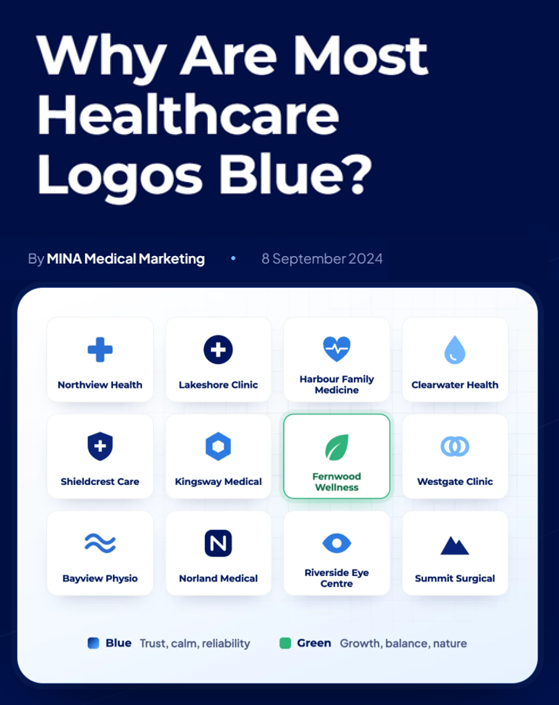
MINA Medical Marketing, an agency based in Canada, recently asked the question, “Why are most health care marketing logos blue?”
“In healthcare, blue is a color that evokes feelings of trust, reliability, calmness, and professionalism, all attributes that are essential in healthcare,” Team MINA explained. “Patients need to feel that they are in safe hands, that the care they receive is trustworthy, and that their healthcare providers are knowledgeable and competent.”
And blue, the color psychologists attest, communicates these qualities.
Today political analysts describe the results of the U.S. 2026 midterm elections as a Blue Wave or a Blue Tsunami, quantifying Democratic candidates up-and-down ballots for Senate, House, State, and local positions generally blowing out those running on the Republican tickets, nationwide.
In today’s blog, I’m thinking through the results of the 2026 midterms through the lens of health care, health reform, public health, and the successful candidates who have health care credentials: namely, doctors and nurses.
First consider the political “blue brand” of Democrats compared with Republicans on the issue of managing the cost of health care in the U.S. On the trust-front, nearly two-times the number of U.S. voters trusted Democrats over Republicans on doing a better job handling the cost of care, based on KFF’s (Kaiser Family Foundation’s) September 2026 Health Tracking Poll. In my recent post discussing that poll on Gas ‘N Healthcare ‘N Voting here in Health Populi.
Healthcare garnered a top priority among registered Democrat voters in Gallup’s October poll, closely followed by income and wealth distribution and the economy, writ large. Leading up to the 2026 midterms, it became clear that health care costs were bundled, in U.S. voters’ minds and wallets, as a key affordability and equity issue.
It’s important to note, in terms of voters’ health care priorities and values, that abortion was extremely important to about 1 in 2 Democrats, as shown in the line chart.
On the policy front, we know right now based on reporting from PBS that House Democrats are working on a “first 100-days agenda” that will lay out key priorities, a political to-do list if you will, to address voters’ personal priorities and challenges with affordability and corruption. As Hakim Jeffries, who will assume the House Leadership position when the next Congress convenes in 2027, explained, “Fighting for an affordable America — that’s what unites Democrats all across the country.”
Some of the key health care political to-dos could focus on the following issues where Americans’ health care challenges have worsened in the past 24 months:
For Americans facing the loss of Affordable Care Act health insurance plans, Democrats may take on reinstating ACA tax subsidies to enable newly uninsured health citizens to re-gain their insured status
Address cuts made to Medicaid programs, which have left those previously covered by the program to be uninsured, or under-covered — this has impacted families and notably children with access to care
Lower prescription drug costs, which in President Trump V 1.0 were a top priority he discussed with TIME magazine in an interview as the magazine’s “Man of the Year.” I wrote about this here in Health Populi in December 2016 (think: nearly 10 years ago!) following the publication of that TIME interview, when President Trump was quoted saying, “I’m going to bring down drug prices. I don’t like what’s happened with drug prices,” critiquing the pharmaceutical drug industry saying that drugmakers are “getting away with murder.”
Improve Medicare payments to physicians, to reverse CMS’s proposed 1%+ physician payment cut and limiting payments for certain other services.
Convene oversight sessions looking into health insurers’ prior authorization practices and surprising billing procedures fixing the No Surprises Act.
At the State level, we always expect Governors to address health care services and access, and we heard from a few candidates who won their elections in these midterms about Medicaid expansion. Keisha Lance Bottom, who will assume Georgia’s top state post, has advocated for Medicaid expansion, which as a governor she could endeavor to do – dependent on Federal funding and support for the initiative.
Dr. Amy Acton, a physician who will assume Ohio’s Governor position in 2027 — who will become the first woman physician to serve as Governor in U.S. history — also wants to assure Medicaid expansion, as well as address prescription drug costs and medical debt. One of her proposals on the campaign was to create a Medicaid pharmacy benefit management platform (“OhioRx”) for the state of Ohio and its health citizens.
Dr. Annie Andrews, a pediatrician, is Senator Elect from South Carolina, beating out her opponent Darline Graham, long-time Senator Lindsay Graham’s sister. Dr. Andrews, like Dr. Acton, featured health care issues in her legislative priorities, seen on her campaign site: #1 is, “Healthcare is a right, not a privilege.”
None of this will be easy, even with Democratic majorities in the House and Senate, given that President Trump warned he could take on the persona of “Mr. Veto” which he discussed on Fox News — that is, never signing into legislation the health care proposals brought to the DESK in the Oval Office. “Democrats will face a health care stress test,” Adriel Bettelheim wrote in Axios on the coming 24-months of legislative tussles Dem’s health care policies could confront.
Health Populi’s Hot Points: Finally, under the banner of “difficult to do in the short term” we heard the phrase “Medicare for All” used by several candidates in the 2026 midterms, Most notably and consistently, Dr. Abdul El-Sayed of Michigan put M4A as a centerpiece of his run. Dr. El-Sayed won the state’s Senate race, bolstered by superb “political athleticism” and consistent messaging about affordability — as illustrated by the sign from one of his rallies: “Money out of politics, Money in your pocket.”
Troy Jackson, who successfully beat out Susan Collins, 30-year veteran of the Senate, replacing her as Maine’s new Senator, has also featured universal health care in his stump speeches, an attractive prospect for workers in Maine who have lost their health insurance and facing rural hospital shutdowns and access challenges.
We know health care, costs, access, and equity were motivations for many health citizens voting in the 2026 midterm elections. Once the Democratic majorities take their seats in Congress, impatient patients in the U.S. will expect health care costs and related issues to be front of mind and action for these newly-elected legislators. Will the Blue Wave devolve into a case of The Blues for U.S. health citizens? For the public’s health, we hope that won’t be the case.
The post A Healthcare Blue Wave? What the U.S. 2026 Midterm Elections Revealed appeared first on HealthPopuli.com.