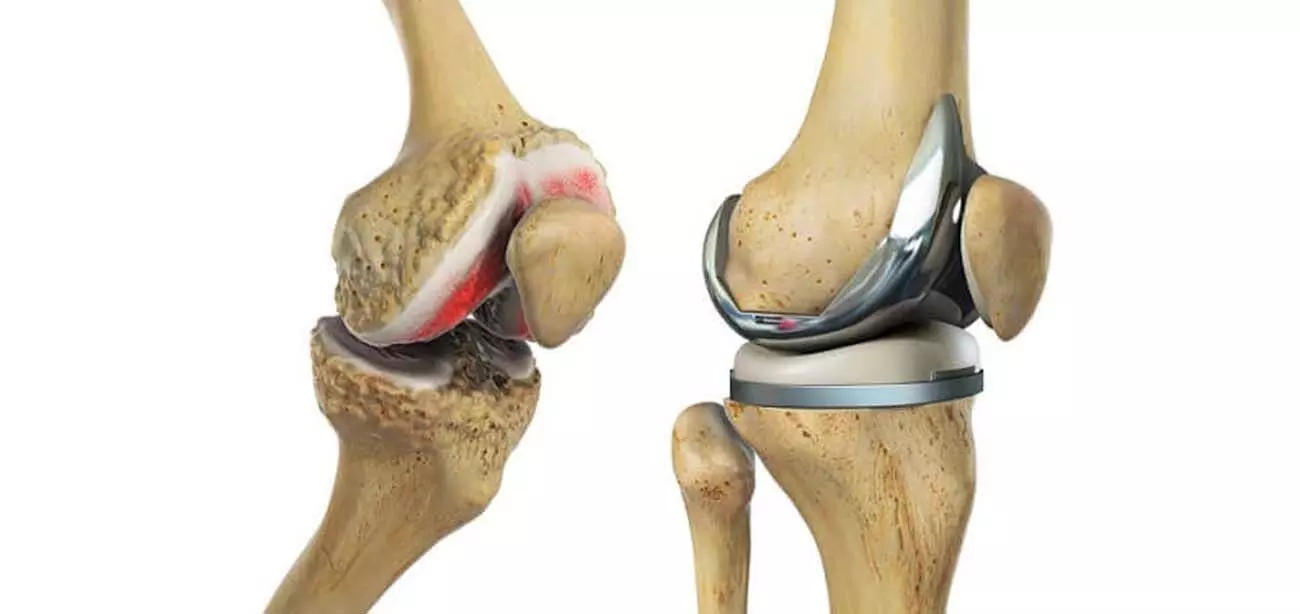
Nearly 20% of individuals undergoing TKA are unsatisfied with the results, even when radiographic and clinical evaluations suggest appropriate alignment and component positioning.The Forgotten Joint Score (FJS) is a patient-reported outcome measure developed to assess joint awareness, potentially differentiating between “good” and “excellent” outcomes. Prosthetic designs, specifically cruciate-retaining (CR) and cruciate-substituting (cruciate sacrificing/substituting [CS]) implants, may influence joint awareness due to differences in posterior cruciate ligament (PCL) preservation.
Yashar Khani et al conducted a study to compare the joint awareness outcomes, measured by the FJS, between CR and CS implants in total knee arthroplasty (TKA). It has been published in ‘JBJS Open Access.’
A systematic review and meta-analysis were conducted following PRISMA guidelines. Scopus, PubMed, Embase, and Web of Science without date or language restrictions. Studies comparing CR and CS implants reporting FJS outcomes were included. Data extracted included study characteristics, patient demographics, intervention details, follow-up durations, and FJS scores. Risk of bias was assessed using the Risk of Bias in Nonrandomized Studies of Intervention-I tool. A random-effects meta-analysis using Hedges g was performed, with sensitivity analyses and meta-regression to explore heterogeneity.
The key findings of the study:
• Seventeen cohort studies involving 4,245 patients were included.
• The meta-analysis demonstrated that CS implants were superior to CR implants in terms of FJS (Hedges g = 20.39; p = 0.018), indicating a small to medium effect size favoring CS designs.
• High heterogeneity was observed (I 2 = 95.69%).
• Sensitivity analyses yielded similar results, and meta-regression did not identify significant sources of heterogeneity.
The authors concluded – “This systematic review and meta-analysis found that CS implants are superior to CR implants in terms of joint awareness measured by the FJS, contradicting our initial hypothesis that CR designs would provide a more natural-feeling joint due to preservation of the PCL. Despite a small to medium effect size, these findings suggest that CR implants may not yield better joint awareness in most cases. Although CS implants showed modestly higher FJS scores than CR implants, the evidence remains insufficient for definitive clinical recommendations; future randomized trials using a standardized, multimodal PROM set are essential to clarify how implant design, radiographic alignment, and patient factors intersect to optimize satisfaction after TKA.”For further details on the article refer to:
Cruciate-Retaining Implants Do Not Provide a More Natural Joint Feeling Than Cruciate-Substituting Implants in Total Knee Arthroplasty
A Systematic Review and Meta-Analysis
Yashar Khani et al
JBJS Open Access 2025:e25.00136.
http://dx.doi.org/10.2106/JBJS.OA.25.00136
Cruciate-Retaining implants do not provide more natural joint feeling than Cruciate-Substituting implants in TKA: study
 By
health_news
By
health_news