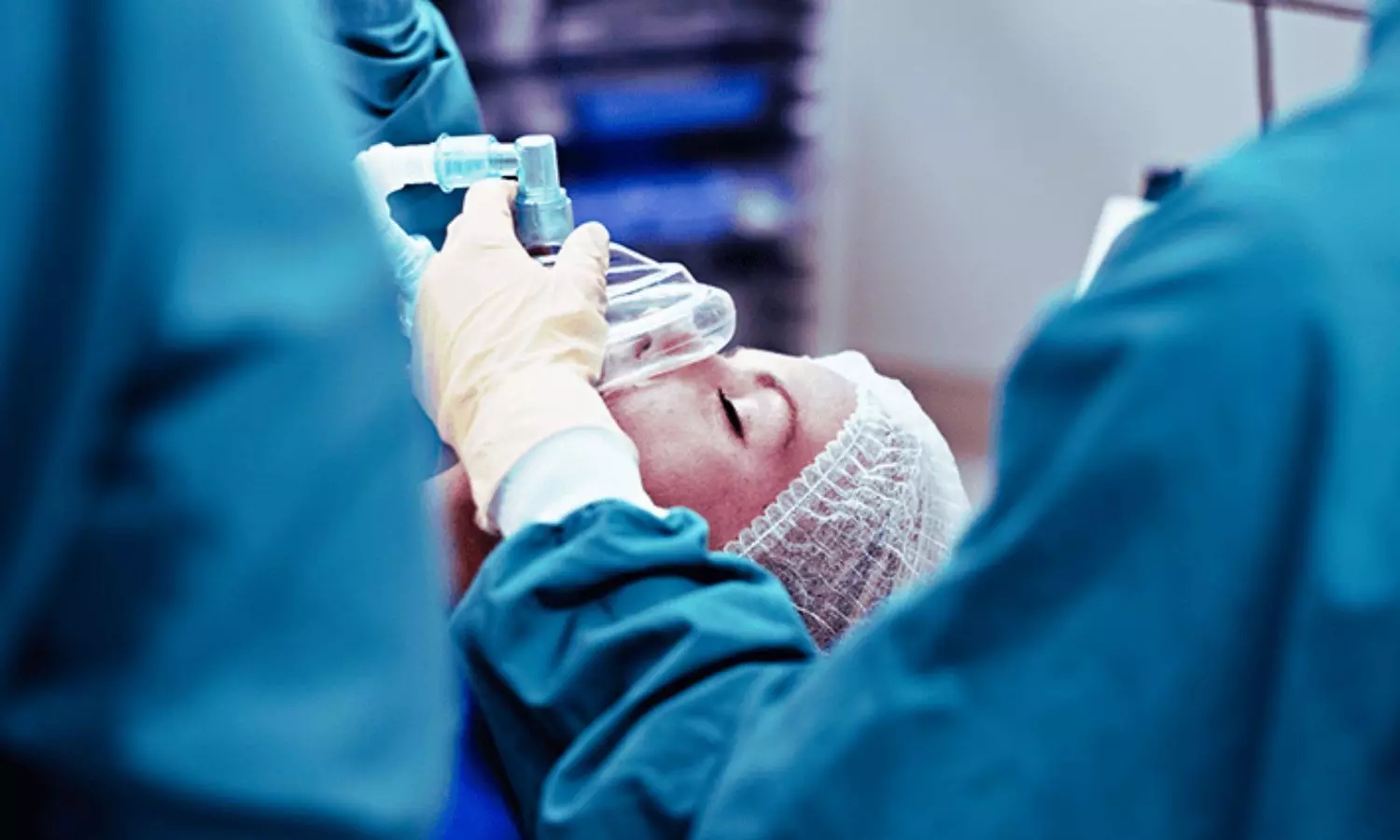
A new study published in the Journal of the American Medical Association found that among patients at increased risk of postoperative pulmonary complications undergoing open abdominal surgery with general anesthesia, high positive end-expiratory pressure (PEEP) with recruitment maneuvers did not lower the incidence of postoperative pulmonary complications when compared to a standard low-PEEP ventilation strategy.The randomized study evaluated whether tailoring ventilation to achieve low driving pressure during surgery could improve outcomes for patients at elevated risk of lung complications. This research enrolled 1,435 adults across 29 hospitals in 5 European countries between April 2019 and December 2024, with final follow-up completed in March 2025.The participants were randomly assigned to receive either a driving pressure–guided approach using higher PEEP levels combined with periodic recruitment maneuvers, or to receive standard care consisting of lower PEEP levels without recruitment maneuvers. Both groups were ventilated with low tidal volumes.The primary outcome measured was the occurrence of postoperative pulmonary complications within the first 5 days after surgery. These complications included severe respiratory failure, bronchospasm, suspected lung infection, pulmonary infiltrates, aspiration pneumonitis, atelectasis, acute respiratory distress syndrome, pleural effusion, cardiopulmonary edema, and pneumothorax.Pulmonary complications occurred in 19.8% of patients who received the high-PEEP, recruitment-based strategy, when compared to 17.4% of patients in the low-PEEP group. The difference was not statistically significant, indicating that the advanced ventilation method did not provide a measurable clinical advantage.The study also found important differences in intraoperative events. Patients receiving the high-PEEP strategy experienced more episodes of low blood pressure and required vasoactive medications more frequently to stabilize circulation. In contrast, episodes of low oxygen saturation occurred more often in the low-PEEP group, though these events were relatively uncommon overall. The median age of participants was 66 years, and just over half were women. Nearly all enrolled patients completed the trial.Overall, for patients at increased risk of pulmonary complications undergoing open abdominal surgery under general anesthesia, individualized high-PEEP ventilation guided by driving pressure does not improve postoperative lung outcomes when compared to a simpler low-PEEP approach.Source:Writing and Steering Committees for the DESIGNATION-Investigators, Dorland, G., Gama de Abreu, M., Hemmes, S. N. T., Hol, L., Hollmann, M. W., van Meenen, D. M. P., Nijbroek, S. G. L. H., Schultz, M. J., Serpa Neto, A., & Vermeulen, T. D. (2026). Intraoperative driving pressure-guided high PEEP vs standard low PEEP for postoperative pulmonary complications. The Journal of the American Medical Association, 335(8), 693–702. https://doi.org/10.1001/jama.2025.23373
Intraoperative High PEEP and Recruitment Maneuvers fail to Reduce Postoperative Pulmonary Complications: JAMA
 By
health_news
By
health_news