
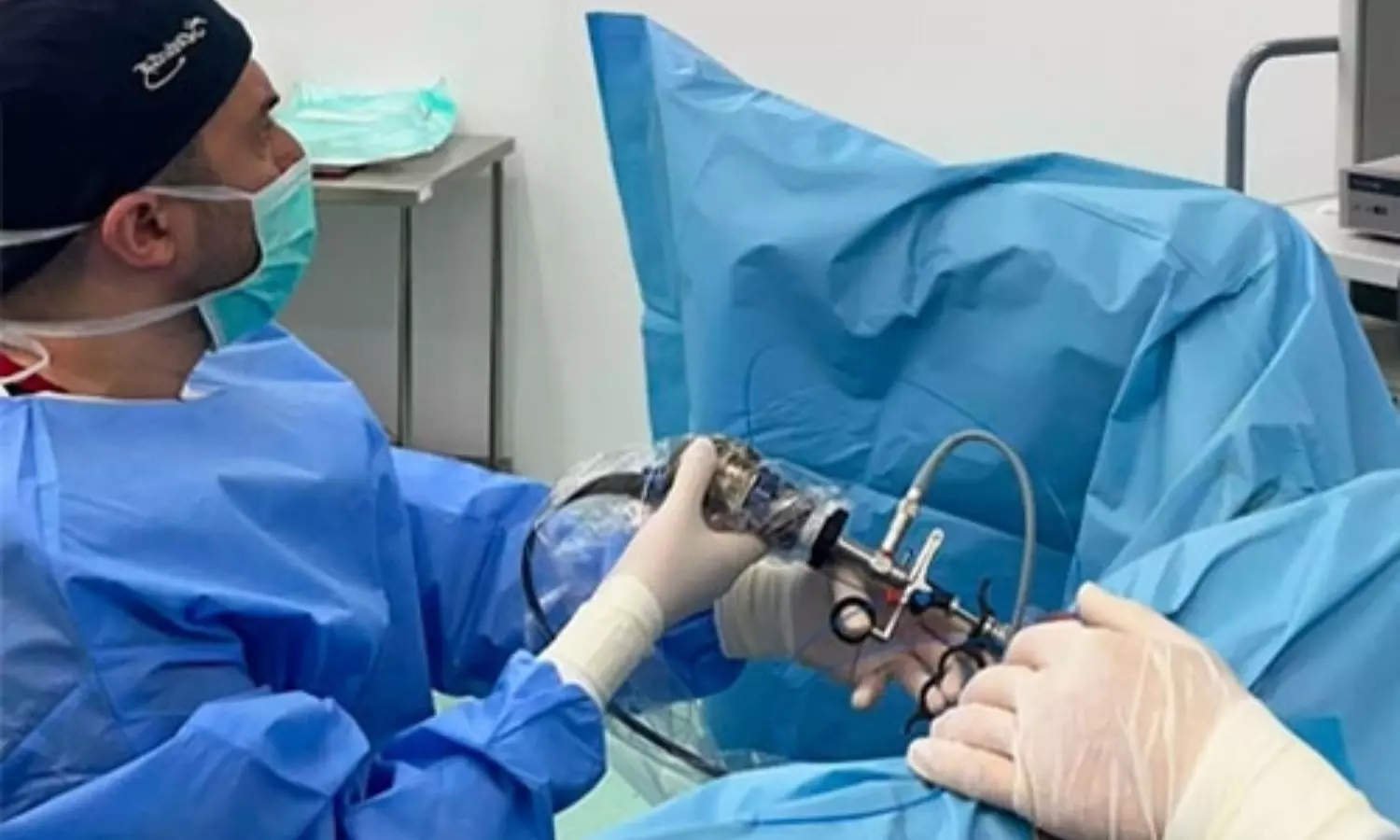
A recent study published in the Journal of the American Medical Association found that patients taking glucagon-like peptide-1 (GLP-1) or glucose-dependent insulinotropic polypeptide (GIP) agonists who continued their medication until the time of upper endoscopy had higher rates of retained stomach contents when compared to those who skipped their last dose. However, following a clear liquid diet the day before the procedure eliminated significant residual gastric volume (RGV), regardless of whether the medication was withheld. The study also suggests that point-of-care gastric ultrasound may help assess stomach contents and prevent unnecessary rescheduling of endoscopy proceduresGLP-1 agonists and combined GLP-1/GIP therapies are widely prescribed for the management of type 2 diabetes and obesity. However, these drugs are known to slow gastric emptying and retained gastric contents can interfere with endoscopic examinations and increase the risk of aspiration.This clinical trial included adults scheduled for elective upper endoscopy, with or without colonoscopy, who had been taking a stable dose of a GLP-1 or GLP-1/GIP agonist for at least one month. These participants were randomly assigned either to continue their medication or to skip one dose prior to the procedure.A total of 60 patients were included in the analysis, with a median age of 62.5 years where half of the participants were women. Among the 32 patients who withheld one dose, only 3.1% experienced clinically significant RGV. Also, 25% of the 28 patients who continued their medication had significant gastric residue. The absolute difference of nearly 22% points was statistically significant, which prompted termination of the trial early after the risk crossed the predefined stopping threshold.The difference was even more pronounced among patients who were undergoing upper endoscopy alone. In that subgroup, 46.7% of those who continued the medication had clinically significant RGV, compared with just 5% of those who withheld a dose.No cases of clinically significant RGV were reported among patients who underwent both endoscopy and colonoscopy. These individuals had followed a clear-liquid diet the day before their procedures, suggesting that dietary preparation may help reduce the risk of gastric residue regardless of medication use.Despite the increased presence of retained gastric contents among those who continued the drugs, this study did not observe a rise in other adverse outcomes like aspiration events or hospital admissions. Overall, these findings could guide how clinicians manage GLP-1 and GIP agonists prior to endoscopic procedures.Reference:Ahmad, A. I., Garg, S., Jacobs, J., Ansari, Z., Al-Din, T. J., Almomani, A., Valencia, S., Vargo, J., Chatterjee, A., Siddiki, H., Hong, L., Nicolas, M. A., Miller, A., & Shah, T. (2026). Holding vs continuing GLP-1/GIP agonists before upper endoscopy: The OCULUS randomized clinical trial. JAMA Internal Medicine. https://doi.org/10.1001/jamainternmed.2026.0027