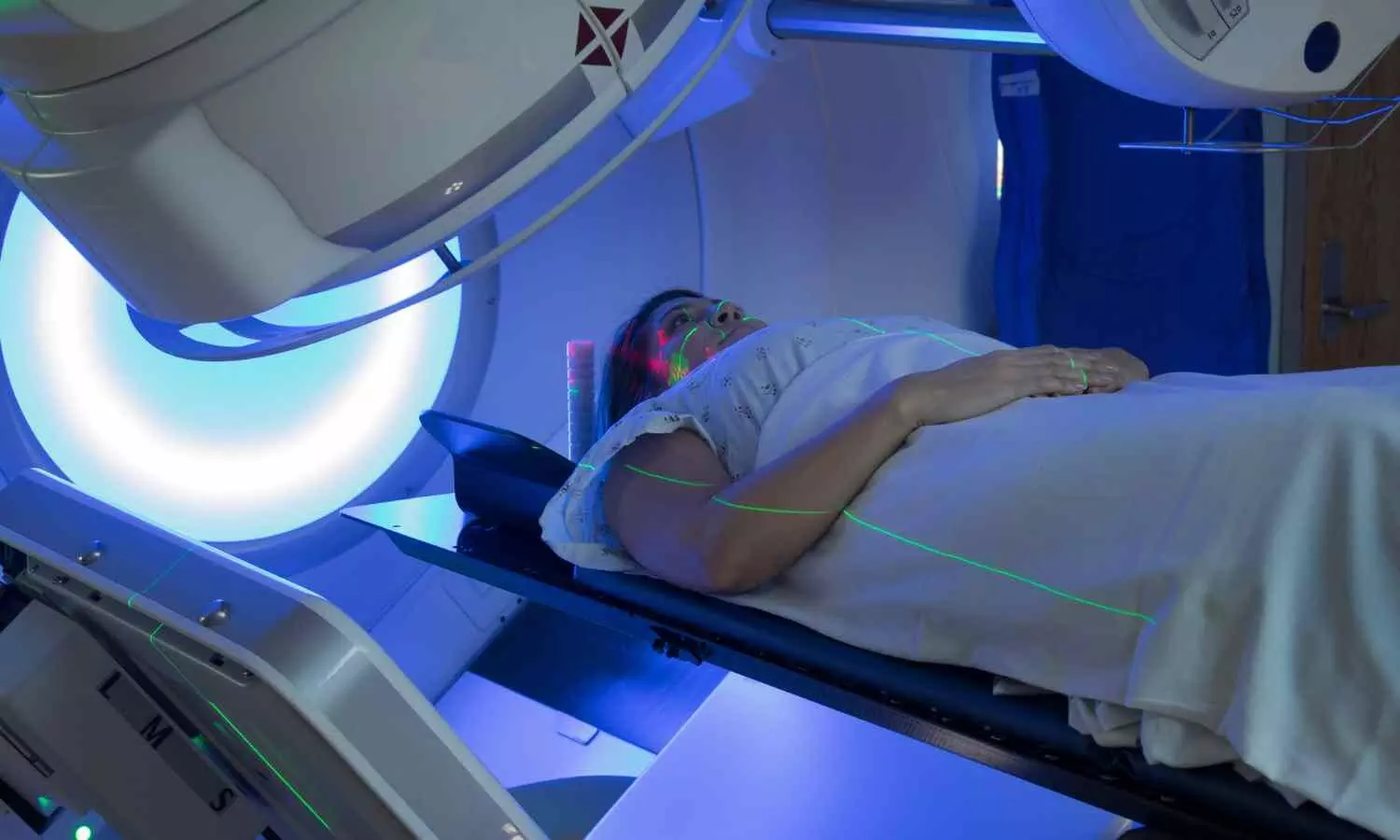
A recent study published in the Journal of the American Medical Association revealed that among patients with early-stage non-small cell lung cancer (NSCLC) undergoing stereotactic body radiotherapy (SBRT), facial (biological) age which assessed using deep learning was associated with overall survival and early mortality, unlike chronological age. A facial age ≥85 years significantly increased early mortality risk. Facial age and lung age provided complementary, independent information, supporting their role as novel biomarkers for risk stratification.The study focused on patients aged 60 and older diagnosed with early-stage NSCLC and treated with SBRT. Accurately gauging physiological fitness and life expectancy in this population has long posed a challenge, as chronological age often fails to reflect true biological health.Thus, this research evaluated two innovative, noninvasive biomarkers, the “face age,” which is estimated using a deep learning algorithm analyzing patient photographs, and the “lung age,” which is derived from spirometry-based pulmonary function tests. The study determined whether these measures could better predict overall survival and early mortality when compared to traditional age metrics.The retrospective cohort study included a total of 670 patients treated from 2009 to 2023 across 6 radiation oncology clinics affiliated with a cancer center. With a median follow-up of nearly 4 years, the findings revealed that the face age of a patients was significantly associated with survival outcomes, while their chronological age was not.For every additional decade in face age, the risk of death increased by 39%, even after adjusting for key clinical factors such as cancer stage, smoking history, and performance status. The patients whose face age was estimated at 85 or older also had a significantly higher risk of dying within two years. Also, being 85 or older by actual age did not show the same predictive value.Lung age showed minimal correlation with face age, which suggests that each metric captures different aspects of biological aging. Also, face age remained a strong independent predictor of survival even when lung age was taken into account. Overall, these findings highlight the potential of AI-driven tools to enhance clinical decision-making. A simple photograph could provide valuable insight into the biological resilience of patients.Reference:Lee, G., Haugg, F., Bontempi, D., He, J., Bitterman, D. S., Pai, S., Guthier, C., Fitzgerald, K. J., Kozono, D. E., Kann, B. H., Aerts, H. J. W. L., & Mak, R. H. (2026). Multimodal assessment of biological age following radiation therapy among patients with early-stage NSCLC. JAMA Network Open, 9(4), e264872. https://doi.org/10.1001/jamanetworkopen.2026.4872
Facial Age Predicts Survival Better Than Chronological Age in NSCLC undergoing radiotherapy: JAMA
 By
health_news
By
health_news