
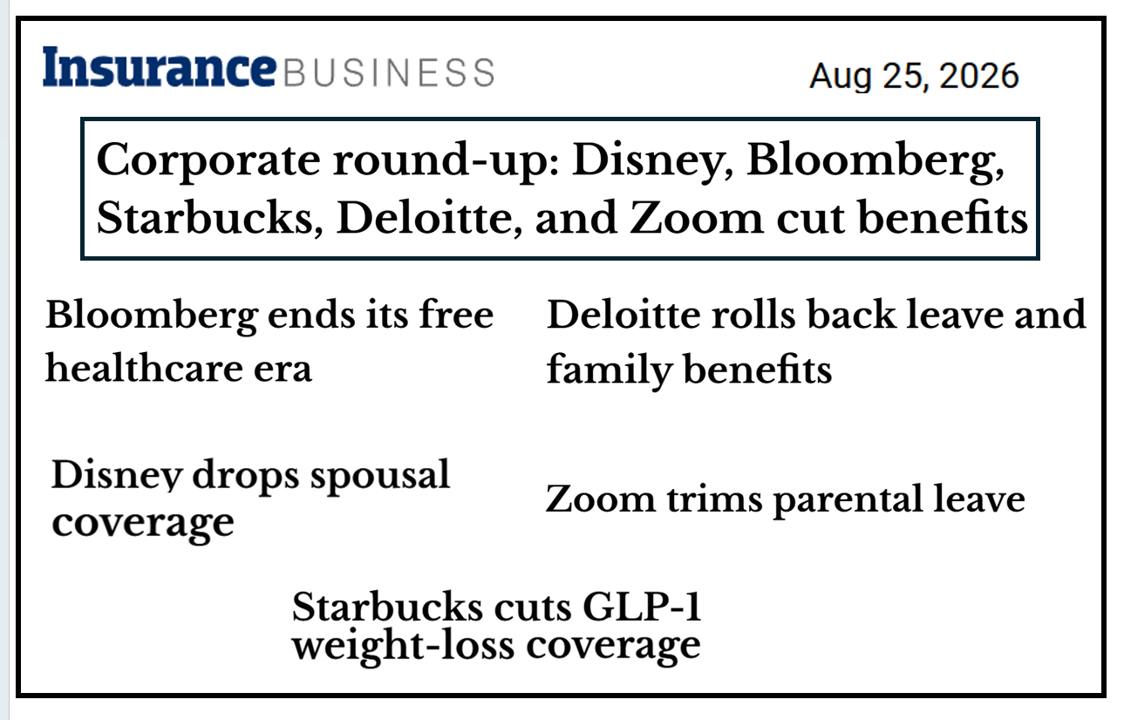
Bloomberg, Deloitte, Disney, Starbucks, and Zoom all announced plans to cut health care benefits looking toward 2027 business plans.
Whether this is a blip in the 80+ year old story of the unique employer-sponsored health care market in America or the beginning of a long end-game for U.S. health insurance at the workplace remains to be seen.
But the forecasts of near-double-digit health premium increases employers will confront in 2027 are potent, forcing companies to, at least, re-visit and alter health benefit designs to surgically target specific cost-increasing categories — such as GLP-1 medicines and behavioral health benefits, along with much-valued coverage such as parental leave and financial advice.
Note that for some smaller employers, health benefit cost increases could exceed 14% (more details on that below), a space to watch in terms of benefit cuts and eroding levels of coverage.
Here is the line chart from the annual Mercer National Survey of Employer Sponsored Health Plans, showing year-on-year cost growth since 2022.
Mercer’s rate-of-increase forecast is in the ballpark of other recent projections we’ve been collecting, from Aon (at 9.5%), the Business Group on Health (at 9.2%), the International Foundation of Employee Benefit Plans (at 10%), PwC (at 9%), and Willis Towers Watson (WTW) with an 11.1% estimate for 2027.
The zenith for health premium cost increases was back in 2003, circled here in a chart clipped from Mercer’s previous iteration of the Employer Benefit Survey. Double-digit premium increases were a feature of annual health benefit planning at that time, where pioneering efforts for value-based care began to emerge in benefit plan designs.
It’s interesting to see that inflation (CPI) was hovering lower than health benefit cost changes every year, which in 2026-27 helps put in perspective as inflation in the U.S. continues to be sticky upward based on the price of petrol/gasoline, food, and certain categories of goods subject to tariffs.
It’s also important to add context to employer-sponsored health care costs looking at how small businesses are facing even higher growth rates to provide health care to workers.
The Peterson-Kaiser Family Foundation (KFF) researchers examined the small group market filings for Affordable Care Act-compliant plans in the small group market — defined as companies with 50 or fewer full-time employees, reporting these results out in an August 2026 study.
Health plan premium increases in the small employer group market are expected to grow even faster in 2027 compared with larger employers providing health insurance — with a median rise of 14% and other employers facing even higher cost spikes. This median rate could be even higher for many small companies: of the 295 plans studied, 95 were facing increased rate changes of 15% to 20%, as shown in the bar chart.
Health Populi’s Hot Points: There are many reasons offered by the various employee benefits firms to explain the much-higher cost of increases for health benefits in 2027. Among these, the following fall on a plurality of firms’ lists of prominent cost-drivers (or inflaters): in no particular order,
The growing prescribing and use of GLP-1 medicines to deal with diabetes, weight loss and obesity — along with other specialty drugs driving pharmacy expenses up
Higher hospital costs, underpinned by consolidation (hospital mergers) in local and regional markets which reduce the level of competition in those communities, allowing institutions to charge higher prices for inpatient and outpatient services
Lower public sector reimbursements for public health programs (Medicare, Medicaid, others) which pressure privately provided commercial insurance plans
Hospitals and other providers allocating more financing to invest in information technology — namely, AI tools and services to address both financial/administrative workflows along with clinical software.
As U.S. families continue to struggle with affordability for kitchen table line items, from mortgages and housing to utilities, the cost of transportation (say, driving to work), and food to feed families, health care costs can crowd out other spending — or, be avoided so consumers can pay for necessities in daily life and living.
Watch for employers providing health insurance at the workplace to levy additional out-of-pocket spending onto workers and their families, along with shifting health and other benefits off of the benefits menu. Affordability challenges face U.S. families in record numbers in 2026, and these worker health insurance forecasts bode ill for improving that health care cost line item in families’ budgets for 2027.
The post In 2027, Employers Will Face the Highest Health Benefit Cost Increases Since 2003 – Is This the Beginning of Workplace Health Erosion? appeared first on HealthPopuli.com.