
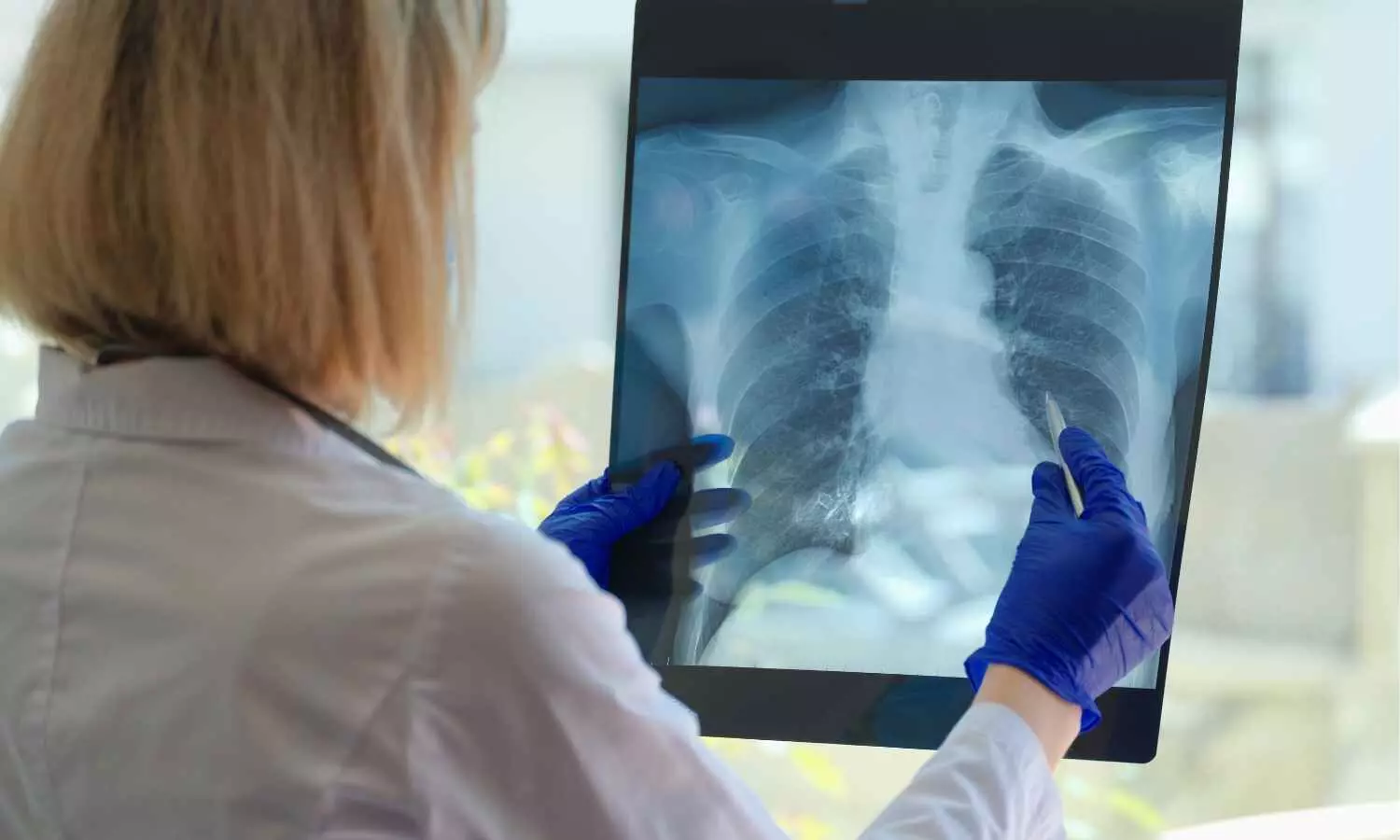
A new study published in The New England Journal of Medicine revealed that in idiopathic pulmonary fibrosis (IPF) inhaled treprostinil slowed the decline in lung function in the placebo-controlled TETON-2 trial. Idiopathic pulmonary fibrosis is a progressive lung disease with a median untreated survival of 3–5 years. Treprostinil, a prostacyclin analogue traditionally used to treat pulmonary hypertension, has recently drawn interest for its possible antifibrotic effects. Thus, this study looked into how inhaled treprostinil might help reduce fibrosis in lung tissue.This phase 3 trial involved patients diagnosed with IPF, who were randomly assigned to receive either inhaled treprostinil or a placebo over a 52-week period. The treatment regimen consisted of 12 inhalations 4 times daily. The study enrolled 593 patients, with 298 in the treprostinil group and 295 in the placebo group. Among them, 463 participants completed trial assessments through the full 52 weeks.The average age of participants was 71.7 years, and most were male. At the start of the study, the mean forced vital capacity (FVC) was 76.8% of the predicted value. Also, about 3-quarters of the participants were already receiving background antifibrotic therapy.The primary endpoint was the change in absolute FVC from baseline to week 52. The results showed that patients receiving inhaled treprostinil experienced a significantly smaller decline in lung function than those receiving placebo. The median FVC decline was 49.9 milliliters in the treprostinil group when compared to 136.4 milliliters in the placebo group. This translated into a statistically significant between-group difference of 95.6 milliliters in favor of the treatment.Overall clinical worsening occurred in 27.2% of patients treated with treprostinil when compared to 39.0% of those receiving placebo. The findings reported a hazard ratio of 0.71, which indicated a meaningful reduction in risk. However, the study did not find a significant difference between the groups in the time to acute exacerbations of IPF. The most commonly reported side effect was cough, occurring in nearly half of patients receiving treprostinil when compared to about one-quarter of those taking placebo. Treatment discontinuation occurred in roughly one-third of patients in the treprostinil group and about one-quarter in the placebo group, with adverse events accounting for about half of those cases. Overall, this study concluded that inhaled treprostinil slowed lung function decline and reduced clinical worsening in patients with IPF over one year.Reference:Nathan, S. D., Smith, P., Deng, C., De Salvo, M., Wuyts, W., Pavie-Gallegos, J., Song, J. W., Kramer, M. R., King, C. S., Mackintosh, J. A., Chambers, D., Miranda, G. V., Breytenbach, N., Peterson, L., Bell, H., Flaherty, K. R., Behr, J., & Cottin, V. (2026). Inhaled treprostinil for idiopathic pulmonary fibrosis. The New England Journal of Medicine, NEJMoa2512911. https://doi.org/10.1056/nejmoa2512911