
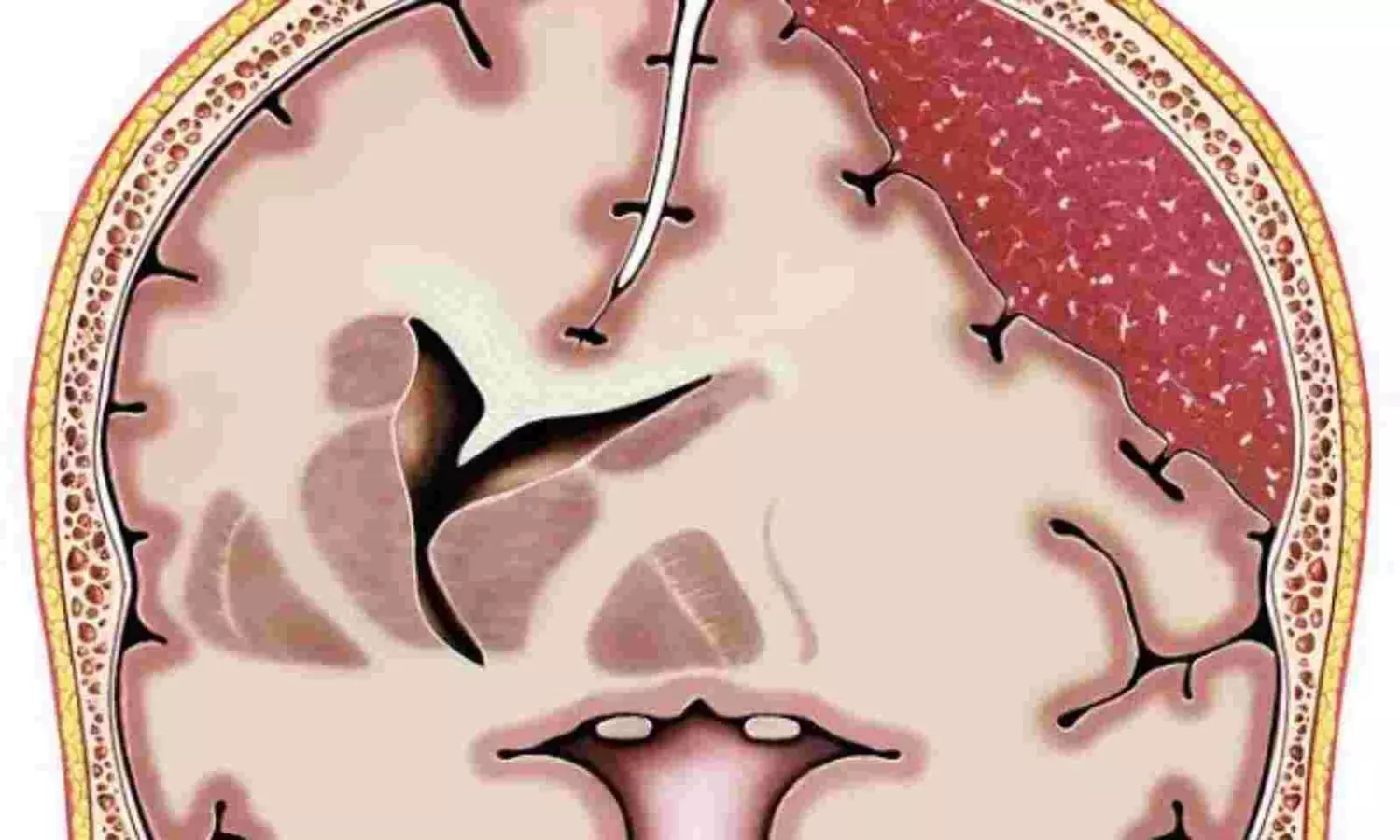
Germany: Researchers have discovered in a new study that among patients with chronic subdural hematoma undergoing burr hole craniotomy, local anesthesia is safe and well-tolerated, and significantly lowers the risk of postoperative delirium compared to general anesthesia. These findings are from a phase 2 randomized controlled trial published in Critical Care, conducted by Robert Mertens and colleagues from the Department of Neurosurgery at Charité – Universitätsmedizin Berlin. The study explored whether performing burr hole craniotomy under local anesthesia (LA) could improve outcomes in patients with chronic subdural hematoma (cSDH), a condition commonly affecting older adults and often requiring surgical evacuation.Postoperative delirium is a frequent complication following neurosurgical procedures in elderly patients and is associated with prolonged recovery and poorer outcomes. To address this, the researchers designed the ABC-SDH trial, a single-center, open-label, prospective randomized study conducted between October 2023 and November 2024. A total of 50 patients with confirmed cSDH were randomly assigned to undergo burr hole craniotomy under either local or general anesthesia (GA).The primary outcomes included the incidence of postoperative delirium, assessed using the Confusion Assessment Method, as well as complication rates during hospitalization. Secondary outcomes focused on procedure duration and clinical status at discharge and at 30-day follow-up. The trial revealed the following findings:Local anesthesia was associated with a substantial reduction in postoperative delirium.Delirium occurred in 4% of patients in the local anesthesia group compared to 32% in the general anesthesia group.Complication rates were lower with local anesthesia (8%) compared to general anesthesia (32%), though this difference was not strongly statistically significant.Procedures performed under local anesthesia had a shorter duration.The average procedural time was approximately 139 minutes with local anesthesia versus 196 minutes with general anesthesia.The severity of complications was similar between the two groups.Functional outcomes at discharge and at 30-day follow-up were comparable between the two groups.Use of local anesthesia did not compromise overall patient recovery.The study is particularly important as it is among the first prospective trials to systematically evaluate postoperative delirium in patients undergoing burr hole craniotomy for cSDH. The findings highlight that local anesthesia is not only feasible but may offer meaningful clinical advantages in a population at high risk for delirium.However, the authors note that the study was conducted at a single center with a relatively small sample size, which may limit the generalizability of the results. They emphasize the need for larger, multicenter trials to confirm these findings and to further assess whether reducing postoperative delirium translates into improved long-term outcomes.Overall, the study suggests that local anesthesia could represent a safer and more efficient approach for selected patients undergoing surgical treatment for chronic subdural hematoma.Reference:Mertens, R., Weber, C.F., Depperich, L. et al. Awake burr hole craniotomy for chronic subdural hematoma: a phase 2 randomized controlled trial. Crit Care 30, 120 (2026). https://doi.org/10.1186/s13054-026-05913-1