
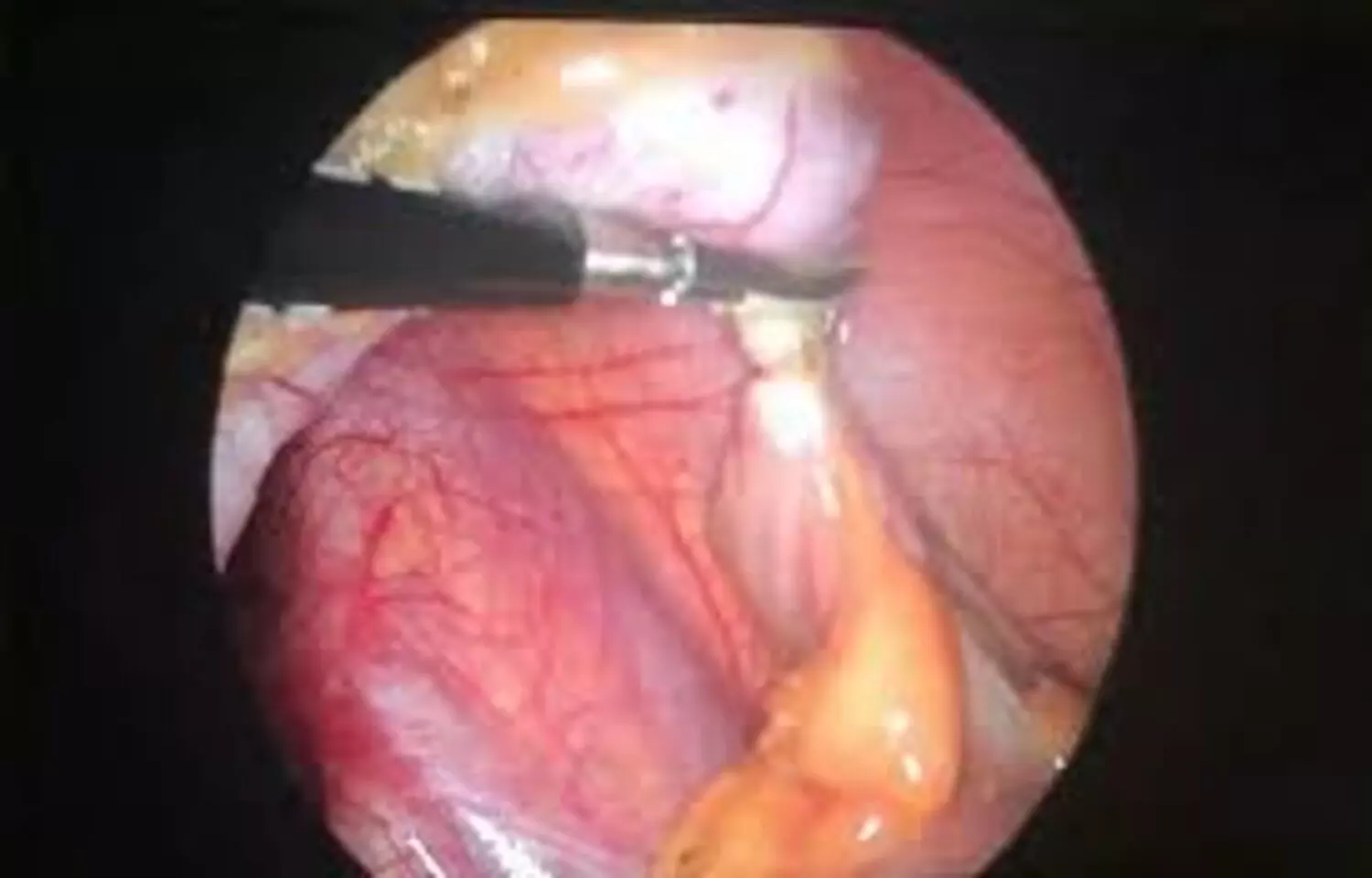
Single-instrument ligation prolongs operative time compared with clip closure but results in similar complication rates. Although previously unused for appendiceal stump closure, this technique can be performed with standard laparoscopic instruments without additional incisions or equipment, making it a practical option that should be included in a surgeon’s skill set for selected clinical situations.In laparoscopic appendectomy, stabilization of the appendix is required during knot-tying for stump closure. In the literature, additional ports or instruments have been used to achieve this stabilization. In our study, we employed a technical variation of intracorporeal knot-tying for appendiceal stump closure. This technique has not previously been used for this purpose. It does not require additional ports or instruments. The aim of our study was to evaluate the impact of this knot-tying technique on operative time and safety. This study was conducted in adult patients, who were prospectively randomized into two groups and subsequently underwent laparoscopic appendectomy. First group included patients with single-instrument intracorporeal ligation, whereas second group included patients with polymer clip closure. Neither group employed any instruments other than the standard laparoscopic instruments. The operation time of the patients, the time from the completion of the dissection to the removal of the specimen (closure time) and complications were compared.A total of 68 patients received laparoscopic appendectomy during the present study. There were 39 patients (57.4%) in the clip group and 29 patients (42.6%) in the ligation group. Of the 68 patients included in the study, 25 were women (36.8%) and 43 were men (63.2%). The median age of the patients was 34 (IQR:24–44) years. The mean body mass index (BMI) of the patients was 27.4 ± 4.5. Three patients were diagnosed with perforated appendicitis. Histopathological examination revealed acute appendicitis in 41 patients (60,3%), phlegmonous appendicitis in 26 patients (38.2%), and a normal appendix in 1 patient. The median operative time was 19 (IQR 13–28) minutes in the clip group and 35(IQR 30–45) minutes in the ligation group. Additionally, the median closure time was 3(2–9) minutes and 7 (4–13) minutes, respectively. Operative and closure times were longer in the Ligation Group (both, p = 0.00001). In the clip group, three patients developed wound site infections and one patient developed intra-abdominal abscess. In the ligation group, two patients developed wound site infections and one patient developed intra-abdominal abscess. There was no difference in total complication rates. (p = 1)Closure using single-instrument ligation prolonged the procedure time compared to clip closure and resulted in similar complication rates. This technique, previously unused for closing the appendiceal stump, can be performed with standard laparoscopic instruments without requiring additional surgical instruments or incisions. The method employed could be regarded as a technique that ought to be included in a surgeon’s repertoire of skills for various clinical scenarios.Reference:Topuz, S., İşler, A., Cengiz, E. et al. Single-instrument intracorporeal ligation versus polymer clip closure of the appendiceal stump in laparoscopic appendectomy: a prospective randomized study. BMC Surg (2026). https://doi.org/10.1186/s12893-026-03622-8Keywords:Single-Instrument, Ligation, Feasible, Alternative, Appendiceal, Stump, Closure, aparoscopic, appendectomy, study, Appendix stump closure, Laparoscopic, Single instrument, Appendectomy, Surgical technique