
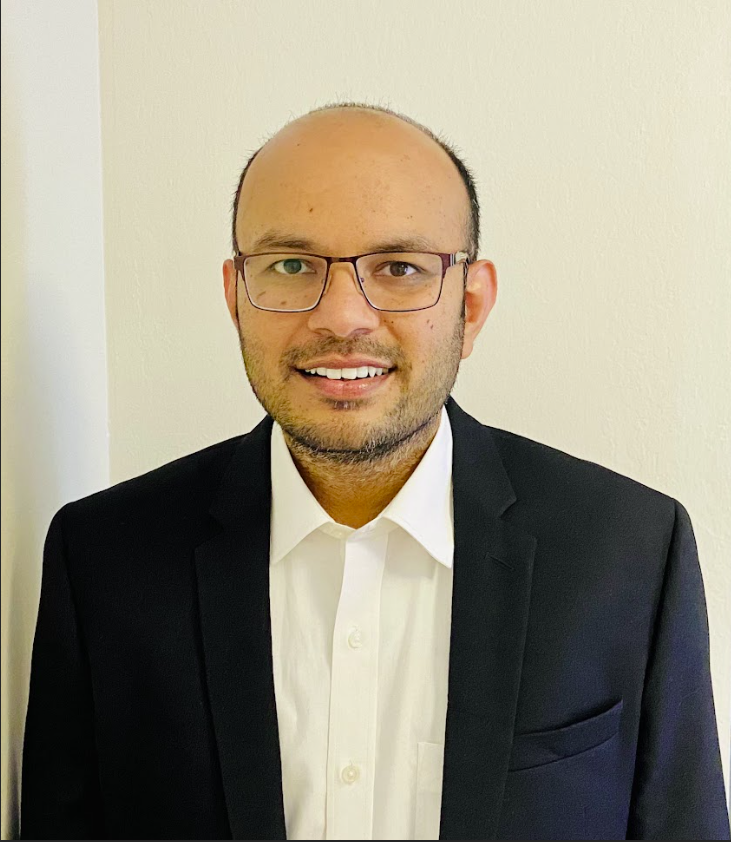
Manan Sheth, Technical Product Manager at N-Power Medicine, Inc.
In 2026, we live in an era of seamless predictive intelligence. For example: My shopping app often anticipates what I’ll need before I’ve even thought about it. My navigation app quietly diverts me away from traffic jams I haven’t encountered yet.
Yet, the moment a patient or clinician steps into the healthcare ecosystem, this “intelligence” seemingly vanishes. For instance, In a typical ten-year cancer survival journey, there are often only 3–4 critical windows where a change in treatment can fundamentally alter the outcome.
We find ourselves in a tragic paradox: the same AI that can predict a consumer’s next purchase with uncanny accuracy is often absent when a physician is making a life-saving decision. For the modern oncologist, the burden of this “intelligence gap” is measurable and exhausting.
The Crisis of the Cognitive Load
The statistics paint a sobering picture of a workforce at its breaking point:
● The Volume: The average U.S. oncologist now manages approximately 260 active patients. This ratio is going to get worse as called out by The President’s Cancer Panel.
● The Administrative Tax: Nearly 30% of the workweek is swallowed by EHR documentation, prior authorizations, and quality reporting.
● The Knowledge Gap: Clinical data is expanding at a rate that exceeds human processing power, making it nearly impossible for clinicians to stay abreast of every rapidly evolving therapy.
● The Research Failure: Approximately 20% of cancer clinical trials fail—not due to poor science, but due to a failure in patient recruitment.
We are not facing a shortage of medical expertise; we are facing a discovery and documentation bottleneck.
Beyond Tools: Building the Medical Intelligence Layer
To bridge this gap, we must move beyond “point solutions” and toward a cohesive Medical Intelligence Layer. This is not about replacing the physician; it is about building a human-led, AI-assisted architecture that augments expertise and accelerates care.
This paradigm shift focuses on three strategic pillars:
1. From Documentation to Curated Review
By leveraging a Multi-LLM ensemble approach, we can synthesize patient history, comorbidities, and diagnostic results into high-fidelity notes before the physician even enters the room. Using multiple models isn’t just a technical preference; it’s an ethical necessity to eliminate algorithmic bias.
● The Impact: Early data indicates this shift can return 30% of clinical time back to the provider, transforming the doctor’s role from creator to reviewer.
2. Precision Casefinding and Scalable Abstraction
In a typical ten-year cancer survival journey, there are often only 3–4 critical windows where a change in treatment can fundamentally alter the outcome. Relying on manual human abstraction to find these “needles in the haystack” is inefficient and unscalable. A Medical Intelligence Layer uses LLMs to parse unstructured data in real-time, identifying clinical trial eligibility with low latency. This ensures that the right intervention happens at the right clinical moment.
3. The “5R” Framework of Patient Empowerment
If clinical research is to be truly integrated into routine care, patients must be empowered participants, not passive subjects. Prospective surveys show that a large majority of patients are open to using AI for diagnostic and treatment support when it is explained clearly and deployed responsibly. Using AI to facilitate the “5 Rs”—delivering the Right information to the Right people in the Right format via the Right channel at the Right time—we turn patients into active partners. Real-time intervention ensures that if a patient becomes eligible for a trial, the opportunity is captured instantly, not months later at a follow-up.
The Path Forward: A Mandate for Innovation
The call to action has already reached the highest levels of governance. The President’s Cancer Panel has explicitly urged healthcare technology vendors to take an active role in strengthening the future of the American cancer workforce. Leveraging AI responsibly is no longer a “nice-to-have” innovation; it is a moral and operational imperative with privacy and safety-first attitude?. By reclaiming the “lost minutes” spent on administrative friction, we don’t just optimize a system, we give the cancer workforce the space to do what they do best: care for patients. Intelligence exists. It is time we put it to work where it matters most.
About Manan Sheth
Manan Sheth is a Staff AI/ML Product Manager with 18+ years of experience building innovative healthcare technology solutions across AI, machine learning, interoperability, EMR systems, data analytics, medical imaging, and clinical trials. He specializes in launching scalable, data-driven platforms that advance clinical research and healthcare innovation. Manan Sheth holds a Master of Science in Computer Applications and Information Technology from Gujarat University, India.