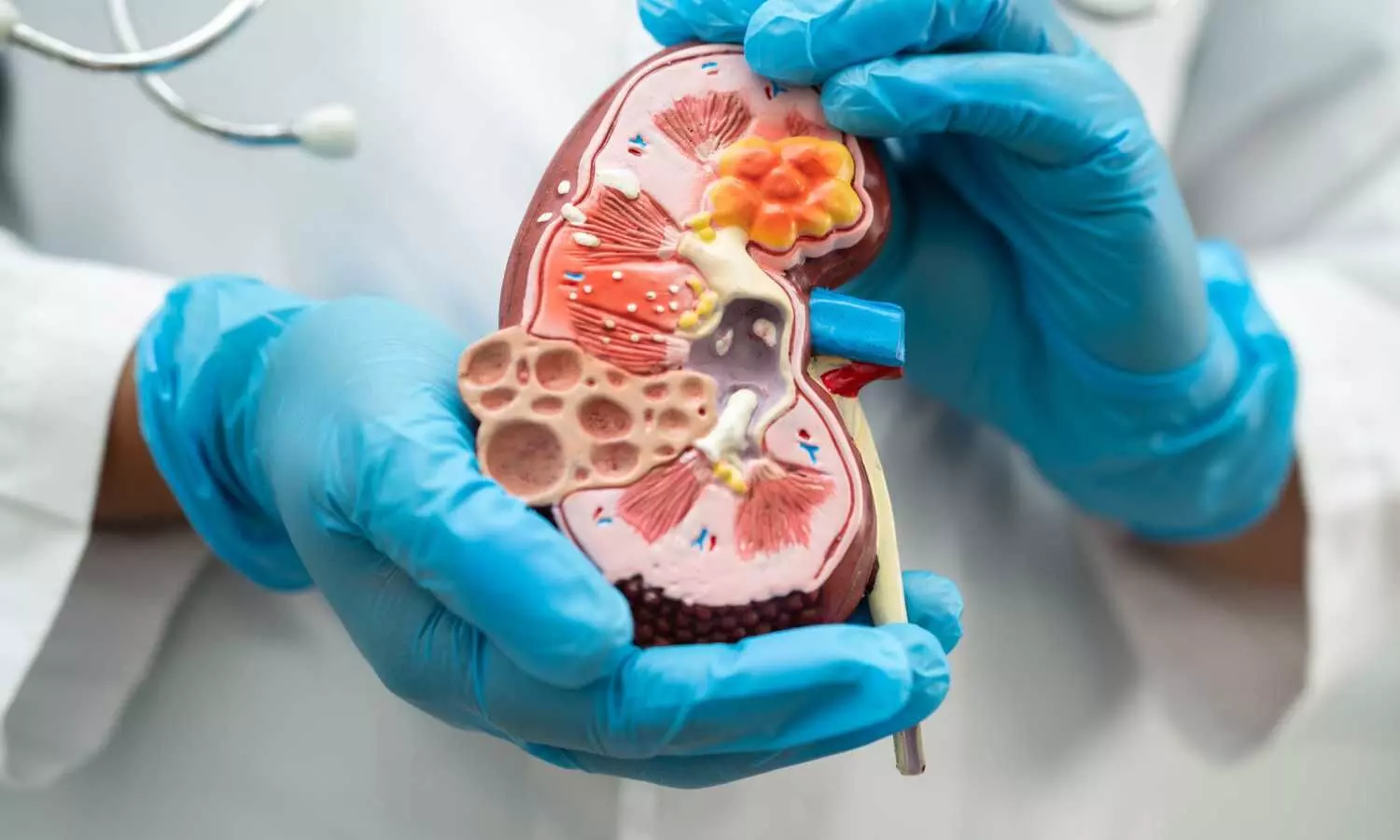
A new study published in the journal of Transplantation Proceedings showed that even if renal function improves, skeletal muscle recovery in Chronic Kidney Disease (CKD) patients is linked to low exercise tolerance prior to kidney transplantation.
Patients with end-stage renal disease frequently have reduced physical fitness, which frequently lasts after kidney transplantation and has a negative impact on long-term results and functional recovery. One important factor influencing post-transplant rehabilitation may be preoperative exercise tolerance, which reflects integrated cardiovascular, pulmonary, and skeletal muscle function. Immunosuppressive medication, uremic myopathy, chronic inflammation, and physical inactivity are the main causes of skeletal muscle weakness in transplant patients. Nevertheless, little is known about how pre-transplant exercise capacity affects postoperative muscle regeneration. Early risk assessment and tailored prehabilitation techniques focused at enhancing functional outcomes following kidney donation may be made possible by identifying low exercise tolerance as a predictor of decreased skeletal muscle regeneration. Therefore, this study was conducted in order to assess the prognosis of muscle recovery in CKD.
Forty patients who had kidney transplants from living donors at Kansai Medical University Hospital between January 2018 and December 2020 were the subjects of this retrospective analysis. Patients were divided into low-tolerance (anaerobic threshold VO₂ < 11 mL/kg/min and peak VO₂ < 20 mL/kg/min) and normal groups using preoperative cardiopulmonary exercise testing (CPX). Dual-energy x-ray absorptiometry was used to assess the skeletal muscle index (SMI) between baseline and 3 years after transplantation.Twelve (30%) of the forty individuals in the low-tolerance group were included in the analysis. After transplantation, both groups’ median SMI dropped at 6 months and then improved. However, compared to the low-tolerance group, the normal group showed a notable rise in SMI starting one year after transplantation.The low-tolerance group showed no recovery and no return to baseline three years after transplantation, while the normal group’s median SMI surpassed pretransplant values and rose continuously (P ≤.05). Low preoperative exercise tolerance was found by multivariable analysis to be an independent predictor of decreased SMI recovery (P ≤.05).Preoperative anaerobic threshold VO₂ and peak VO₂ were shown to be marginally and strongly correlated with 3-year SMI improvement (r = 0.427 and r = 0.607, respectively) according to correlation analysis. Overall, impaired long-term skeletal muscle recovery is substantially predicted by low exercise tolerance prior to kidney donation. Source:Yanishi, M., Kimura, Y., Koito, Y., Matsushita, J., Yoshida, R., Tsukaguchi, H., Taniyama, Y., & Kinoshita, H. (2026). Low preoperative exercise tolerance predicts impaired skeletal muscle recovery after kidney transplantation. Transplantation Proceedings. https://doi.org/10.1016/j.transproceed.2025.11.013
Low Pretransplant Exercise Tolerance Predicts Persistent Sarcopenia After Kidney Transplant: Study
 By
health_news
By
health_news