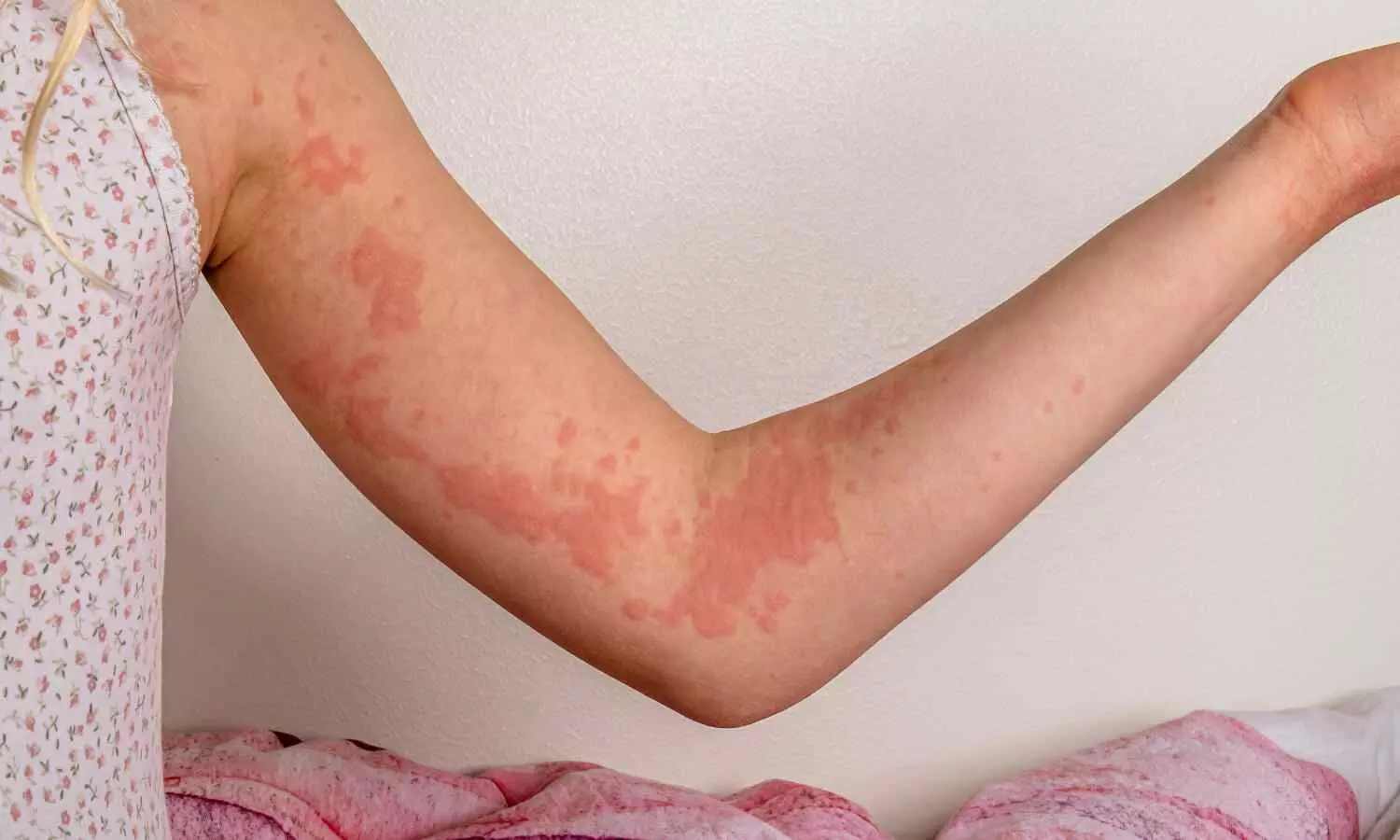
USA: Dupilumab significantly reduced itch and hive severity in patients with chronic spontaneous urticaria (CSU) who remained symptomatic despite antihistamine therapy, findings from the phase 3 LIBERTY-CSU CUPID trials published in JAMA Dermatology have shown. The study was led by Thomas B. Casale from the Division of Allergy and Immunology at the University of South Florida, Tampa, and international collaborators.CSU is a persistent inflammatory skin condition marked by recurrent itchy wheals and, in some cases, angioedema. Although histamine 1–receptor antagonists (H1-antihistamines) are considered first-line therapy, a substantial proportion of patients continue to experience bothersome symptoms. Dupilumab, a monoclonal antibody that blocks interleukin-4 and interleukin-13 signaling pathways associated with type 2 inflammation, has been approved for several inflammatory diseases. Its potential benefit in CSU has been under evaluation in the CUPID clinical program.The recently completed CUPID-C trial was a 24-week, randomized, double-blind, placebo-controlled phase 3 study conducted between 2022 and 2024 across 10 countries in Asia, Europe, and the Americas. The trial enrolled anti–immunoglobulin E (IgE)–naive patients aged 6 to 80 years whose CSU remained uncontrolled despite H1-antihistamine treatment. The design was modeled after the earlier CUPID-A study to meet regulatory requirements for replication.A total of 151 participants were included in the CUPID-C analysis. The mean age was 44.7 years, and over 70% were women. More than half of the participants were taking antihistamines at higher-than-recommended doses at baseline, and nearly 60% had severe disease activity scores. Key Findings:At 24 weeks, dupilumab led to significantly greater reductions in urticaria symptoms compared with placebo.The mean reduction in 7-day Itch Severity Score (ISS7) was 8.64 points with dupilumab versus 6.10 points with placebo.The 7-day Urticaria Activity Score (UAS7) decreased by 15.86 points in the dupilumab group compared with 11.21 points in the placebo group.Pooled analysis of CUPID-A and CUPID-C trials (289 participants) showed consistent improvements in itch severity and overall urticaria activity with dupilumab.Symptom improvement with dupilumab was observed as early as week 3 in the combined analysis.The safety profile of dupilumab was consistent with previous data, with similar rates of treatment-emergent adverse events in both the dupilumab and placebo groups.Investigators highlighted that the replication of results across two similarly designed trials strengthens the reliability of the findings. However, the 24-week duration limits conclusions about the long-term durability of response. In addition, relatively few participants were aged 6 to 18 years, and racial and ethnic diversity was limited, which may affect generalizability.Overall, the CUPID-C trial corroborates earlier evidence that dupilumab can meaningfully reduce itch and hives in anti-IgE–naive patients with CSU who do not achieve adequate control with antihistamines, supporting its role as a therapeutic option in this difficult-to-treat population.Reference:Casale TB, Saini SS, Ben-Shoshan M, et al. Dupilumab in Patients With Chronic Spontaneous Urticaria: Phase 3 LIBERTY-CSU CUPID Randomized Clinical Trials. JAMA Dermatol. Published online February 18, 2026. doi:10.1001/jamadermatol.2025.6023
