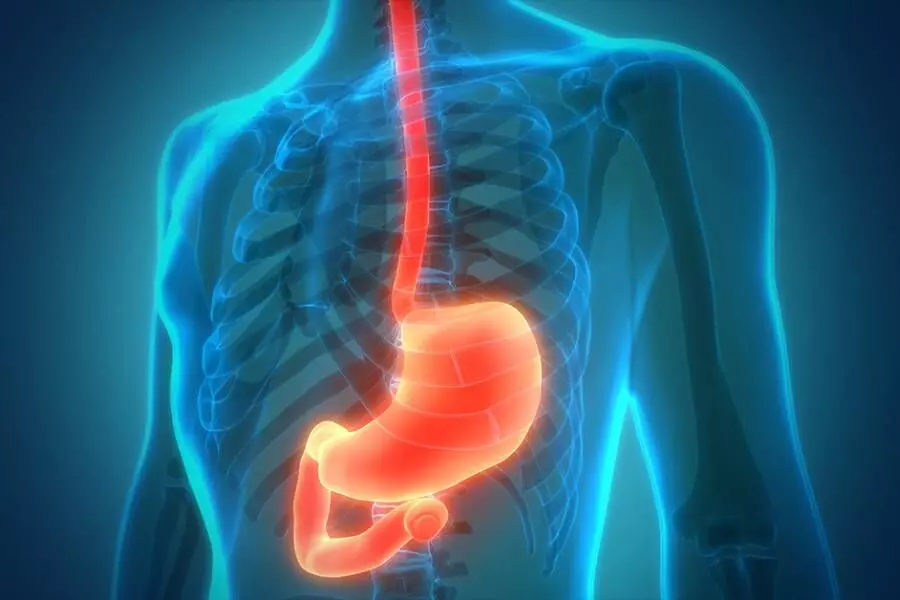
A new study published in the Journal of American Medical Association showed that active surveillance may be appropriate for carefully chosen patients, particularly those with high surgical risk or low recurrence risk and can offer short-term quality-of-life improvements.
For patients with esophageal cancer who obtain a clinical complete response (cCR) following neoadjuvant chemoradiation (nCRT), active surveillance was presented as a noninferior option to esophagectomy in the Surgery as Needed for Oesophageal Cancer (SANO) trial. Recurrence risk, long-term survival, and quality-of-life trade-offs with organ-preserving techniques are still issues, though. Therefore, utilizing updated data from the SANO trial, this investigation was carried out to assess the long-term comparative efficacy of active surveillance vs. routine esophagectomy in patients with cCR following nCRT for locally advanced esophageal cancer.
Markov modeling, probability, and utility inputs from the SANO trial and previous research were employed in this decision analysis model. A 60-year-old man with good functional status and cT3N1M0 esophageal adenocarcinoma who achieved cCR following nCRT was the foundation case. This study compared active surveillance following neoadjuvant chemoradiation with standard regular esophagectomy. Life-years were the secondary endpoint, while quality-adjusted life-years (QALYs) were the primary result. Other model scenarios investigated (1) the effects of esophagectomy on quality of life as a time-varying covariate and (2) 2-year outcomes in accordance with the SANO trial time horizon. Sensitivity analysis assessed the likelihood of recurrence and the trade-offs in quality of life associated with surgery.
When compared to active surveillance, conventional surgery produced higher QALYs (1.74 vs. 1.34; incremental gain of 0.40 QALYs or ~4.8 months in perfect health) and life-years (3.11 vs. 2.41; incremental gain of 0.70 life-years or ~8.4 months) at five years. However, in line with the SANO trial, active surveillance was favored for QALYs at a 2-year horizon (incremental gain of ~15 days).Sensitivity tests showed that the model preferred active surveillance when the likelihood of a local/resectable recurrence was greater than 94%, the recurrence probability was less than 43%, or the esophagectomy had a significant negative impact on quality of life. The long-term QALY benefit of esophagectomy was further reinforced by modeling its quality-of-life impact as time-limited. Overall, when compared to active surveillance, conventional surgery was found to be superior for both survival and quality-adjusted life expectancy at a 5-year horizon. Source:Bondzi-Simpson, A., Gupta, V., Ribeiro, T., Ko, M., Lin, S. H., Coburn, N. G., Hallet, J., & Kidane, B. (2026). Esophagectomy vs active surveillance in clinical complete responders after neoadjuvant chemoradiation. JAMA Surgery. https://doi.org/10.1001/jamasurg.2025.5890
Esophagectomy has long-Term Survival Advantage Over Active Surveillance After neoadjuvant chemoradiation: JAMA
 By
health_news
By
health_news