
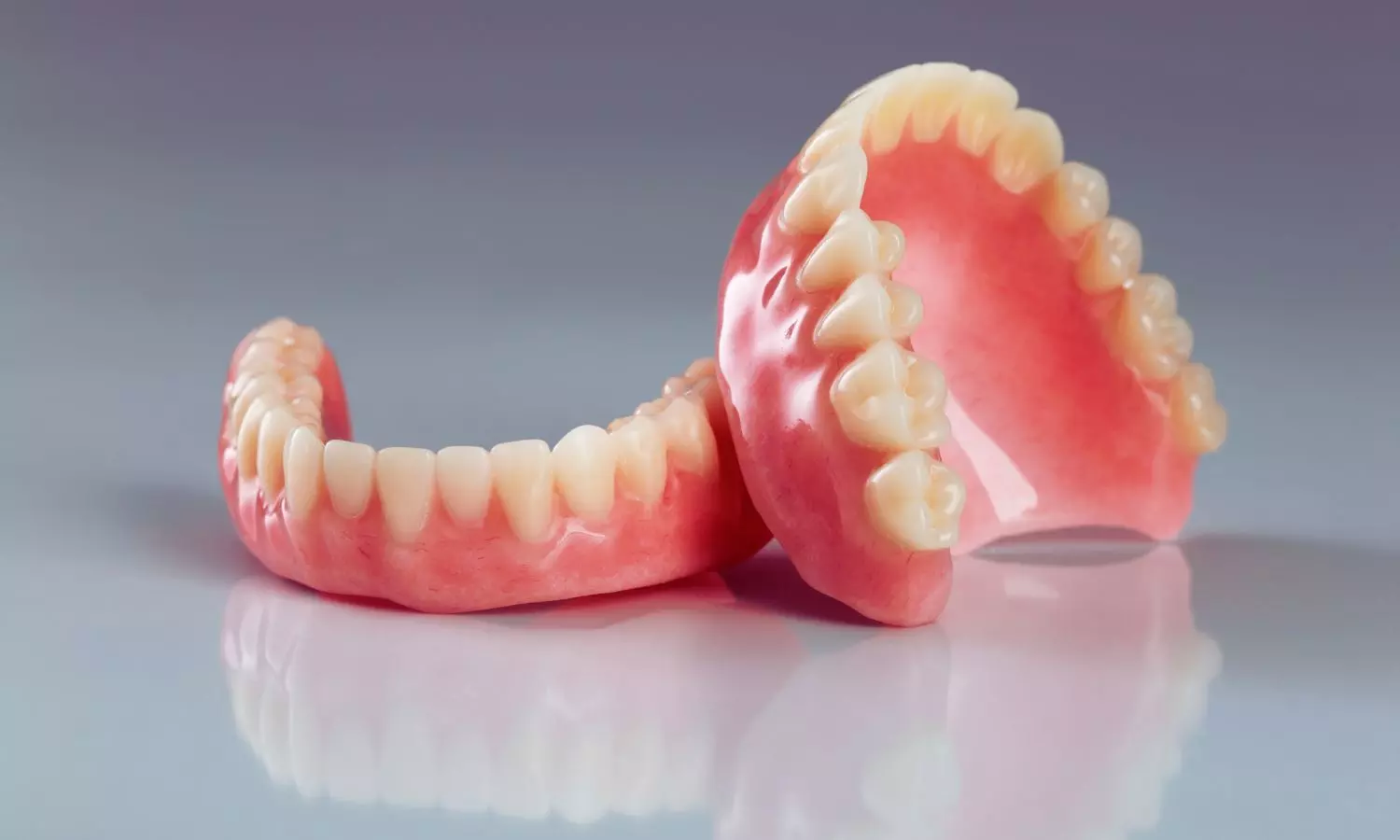
India: Researchers have found in a new study that bond strength in denture fabrication is strongly influenced by material compatibility. CAD/CAM-milled teeth bonded to pre-polymerized, high-pressure PMMA bases demonstrate superior adhesion. In contrast, within conventional heat-cured systems, composite teeth achieve the highest bond strength. To ensure optimal clinical durability in digital workflows, the use of matched CAD/CAM tooth–base systems is recommended. Complete dentures remain essential for restoring function and aesthetics in edentulous patients, yet tooth debonding continues to be a frequent cause of denture failure and repair. With the increasing use of digital technologies in prosthodontics, understanding how artificial teeth interact with different denture base materials has become crucial for improving long-term clinical outcomes.An in vitro study published in the Cureus Journal of Medical Science compared the shear bond strength of three types of artificial teeth—crosslinked acrylic, composite, and CAD/CAM-milled—bonded to conventional heat-cured polymethyl methacrylate (PMMA) and CAD/CAM-milled PMMA denture bases. A total of 60 standardized specimens were prepared and divided equally between the two base materials, with further subgrouping based on tooth type.Bonding procedures followed the manufacturer’s instructions for CAD/CAM systems and standard packing techniques for heat-cured dentures. Shear bond strength testing was performed using a universal testing machine, and statistical analysis assessed the effects of denture base material, tooth type, and their interaction. The study led to the following notable findings:There were clear differences in bond strength across various material combinations.In conventional heat-cured PMMA denture bases, composite teeth demonstrated the highest bond strength, exceeding that of acrylic and CAD/CAM-milled teeth.Within the CAD/CAM workflow, the most reliable and strongest adhesion was achieved when CAD/CAM-milled teeth were bonded to CAD/CAM-milled denture bases.This CAD/CAM tooth–base combination exhibited significantly higher bond strength compared to all other material pairings.Statistical analysis revealed significant effects of both denture base material and artificial tooth type on bond strength.A strong interaction between denture base material and tooth type was observed.Overall, the results indicate that bond strength is primarily influenced by material compatibility rather than by tooth type alone.The authors acknowledged several limitations, including the in vitro design, testing under dry conditions, and the absence of thermocycling or long-term water storage, which may overestimate clinical performance. The evaluation of only one commercial system per category and the use of standardized shear loading further limit generalizability. Variability in bond strength values also suggests caution when extrapolating results to clinical practice.Overall, the study highlights the importance of selecting compatible materials in denture fabrication. For digital denture workflows, matched CAD/CAM tooth–base systems appear to offer superior bonding and reduced risk of debonding. In conventional workflows, composite teeth provide better adhesion. The authors recommend further studies incorporating artificial aging, fatigue testing, and clinical follow-up to confirm the clinical relevance of these findings.Reference:Rout S, Mittal R, Madan R, et al. (December 06, 2025) Shear Bond Strength of Artificial Teeth to Conventional and Computer-Aided Design/Computer-Aided Manufacturing (CAD/CAM) Denture Bases: An In Vitro Comparison. Cureus 17(12): e98562. doi:10.7759/cureus.98562