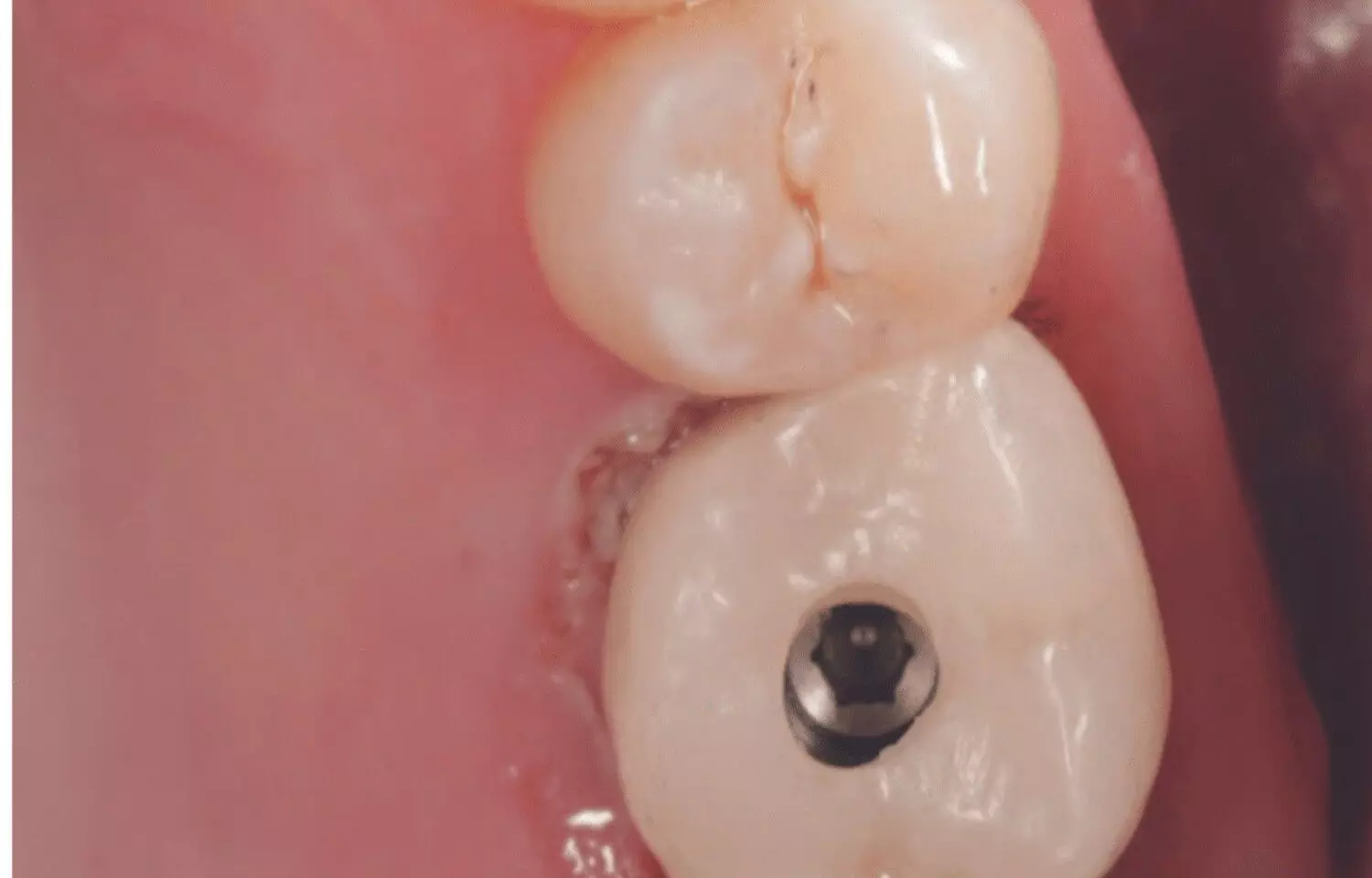
Researchers have found in a new study that threadlockers significantly improved abutment screw retention, with methacrylate outperforming dimethacrylate. Reduced detorque under cyclic loading emphasizes the need for improved retention strategies, and methacrylate-based threadlockers may help prevent screw loosening and improve long-term implant success.A study was done to evaluate and compare the effects of different thread lockers on implant abutment screw loosening. Thirty implant-abutment assemblies were divided into 3 groups: Control group (without threadlocker), dimethacrylate group, and methacrylate group. Each group was subdivided into static and dynamic groups. The specimens were torqued to 35 Ncm, and detorque values were measured after 1 month in static conditions and after cyclic loading. The cyclic loading protocol involved 240,000 cycles at a velocity of 16 mm/s over a 48-h period in a moist environment, simulating 1 year of clinical function.Results were assessed using one-way, two-way ANOVA and multiple pairwise comparisons with a significance level of P ≤ 0.05. The methacrylate group demonstrated the highest detorque values (static: 36.46 ± 0.95 Ncm, dynamic: 33.22 ± 0.34 Ncm), followed by the dimethacrylate group (static: 32.84 ± 1.12 Ncm, dynamic: 29.98 ± 1.05 Ncm). The control group exhibited the lowest detorque values (static: 28.80 ± 0.96 Ncm, dynamic: 25.84 ± 0.63 Ncm). Detorque values were consistently higher in the static condition (32.40 ± 3.37 Ncm) compared to the dynamic condition across all groups (29.68 ± 3.20 Ncm), with statistically significant differences observed (P = 0.000).Within the limitations of the study, application of threadlockers significantly improved abutment screw retention, with methacrylate exhibiting superior performance over dimethacrylate. The reduction in detorque values under cyclic loading highlights the need for enhanced retention strategies in implant prosthetics. Incorporating methacrylate-based threadlockers in clinical practice may mitigate screw loosening and enhance the long-term success of implant-supported prostheses.Reference:Arul, Lizy Teena, et al. “Comparative Evaluation of Abutment Screw Loosening With Two Different Thread Lockers Under Cyclic Loading: an in Vitro Study.” Journal of Indian Prosthodontic Society, vol. 26, no. 1, 2026, pp. 49-55.Keywords:Arul, Lizy Teena, Methacrylate, Threadlockers, best, Enhancing, Abutment, Screw, Retention, Study
