
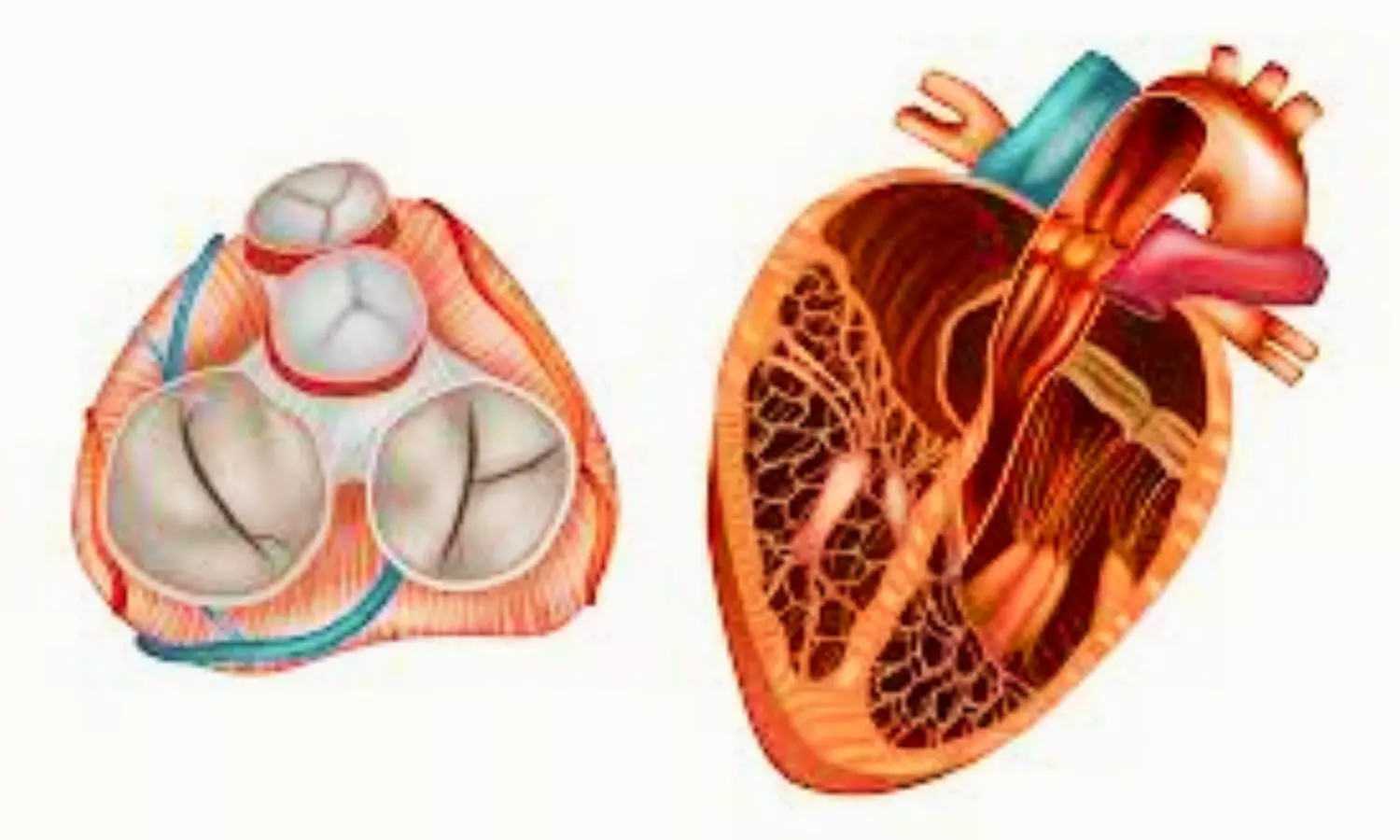
Latent valvular damage in children often escapes routine detection, as the prevalence of subclinical Rheumatic Heart Disease (RHD) in Meghalaya stands at 4.7 per 1,000, vastly outnumbering clinical cases at just 0.49 per 1,000, as a recent study has shown.The study was published in the Indian Heart Journal, August 2025.Bridging the Regional Data Gap in Cardiovascular HealthAlthough rheumatic heart disease continues to be a major public health problem in developing nations, existing data in India—which houses 40% of global cases—lacks representation from the Northeast, creating a significant clinical gap. To address this, the study aimed to determine RHD prevalence in school-going children of Meghalaya and risk factors associated with it through standardized screening.Study OverviewThe cross-sectional epidemiological study, conducted between November 2021 and November 2022, screened a population of 4,039 children aged 5 to 15 years across nine districts of Meghalaya using portable 2D echocardiography and World Heart Federation (WHF) criteria, excluding only those who did not provide parental consent. The primary and secondary endpoints focused on establishing prevalence rates per 1,000 children and evaluating risk associations with age, gender, and school environment using logistic regression analysis.Key Clinical Findings of the Study Include:Subclinical Dominance: In the study, echocardiographic screening reveals that subclinical rheumatic heart disease (RHD) is nearly ten times more prevalent than clinical cases, with rates of 4.7 per 1,000 children versus just 0.49 per 1,000 for clinically manifest disease.Demographic Risk Gradients: The likelihood of disease increases significantly as children age (Odds Ratio [OR] = 1.16) and is approximately twice as high in females, who exhibited a prevalence of 6.29 per 1,000 compared to 3.04 per 1,000 in males.Socioeconomic Disparities: In the study, the vulnerability is markedly higher in rural populations (5.23 per 1,000) and among students in government-run schools (7.68 per 1,000) compared to those in urban settings (3.86 per 1,000) or private institutions (5.99 per 1,000).Standardized Diagnostic Yield: In the study, screening identified 1.98 per 1,000 children with definite RHD and 2.72 per 1,000 with borderline lesions, highlighting the precision of morphology-based detection.Disease Pattern Deviations: The distribution of latent cases showed a uniquely high proportion of advanced lesions, with a definite-to-borderline ratio of 0.73, whereas borderline cases typically outnumber definite ones by three to five times in most international screening cohortsClinical Implications for Primary PreventionFor practicing physicians, these findings underscore that echocardiographic screening is a vital, cost-effective tool for detecting early valvular damage before it evolves into expensive, life-threatening sequelae. The study suggests that implementing a long-term active surveillance registry is essential to monitor disease progression and define the precise threshold for initiating secondary prophylaxis in asymptomatic patients.ReferenceKapoor M, Lyngdoh WV, Gunasekaran AK, et al. Prevalence of rheumatic heart disease in school going children of Meghalaya – An echocardiographic study from Northeast of India. Indian Heart J. 2025;77:432–438.