
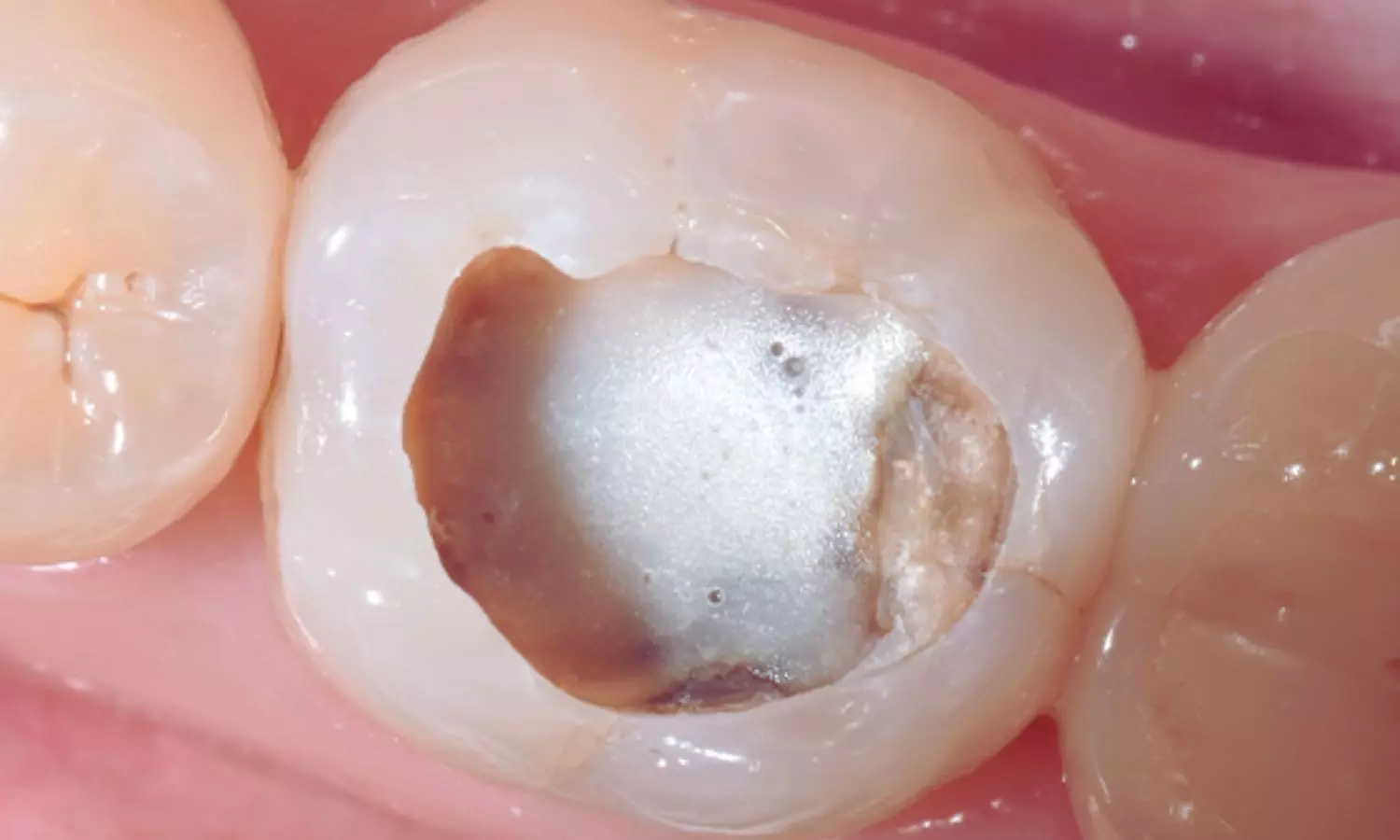
India: A new study has found that clinical outcomes showed no significant differences when comparing RMGIC, Biodentine, Theracal, or MTA with calcium hydroxide after selective caries removal. These findings indicate that treatment success is not significantly influenced by the choice of protective liner.Selective caries removal has emerged as a conservative approach aimed at preserving pulp vitality in teeth with deep carious lesions. A key clinical decision following this procedure is the selection of a protective liner, as it is believed to support pulp healing and long-term tooth survival. However, the superiority of one liner over another has remained uncertain. To address this, researchers conducted a systematic review and meta-analysis to evaluate whether different protective liners influence clinical success after selective caries removal.The review, published in Biomaterial Investigations in Dentistry, was led by Vaishnavi Patankar from the Department of Conservative Dentistry and Endodontics, Bharati Vidyapeeth Dental College, Navi Mumbai, along with colleagues. The researchers followed the Preferred Reporting Items for Systematic Review and Meta-Analysis (PRISMA) guidelines to ensure methodological rigor. Using a Population, Intervention, Comparison, Outcome, and Study Design (PICOS) framework, they focused on patients with deep carious lesions in permanent teeth who underwent selective caries removal.Only clinical trials with a minimum follow-up period of one year were included. These studies compared calcium hydroxide with other commonly used protective liners, including glass ionomer cement (GIC), resin-modified glass ionomer cement (RMGIC), mineral trioxide aggregate (MTA), Biodentine, and Theracal. The primary outcome assessed was the preservation of pulp vitality, a critical indicator of treatment success. Key Findings:Eight clinical trials involving a total of 678 teeth were included in the final analysis after screening and full-text evaluation.Meta-analysis of seven studies showed no statistically significant differences in clinical outcomes between calcium hydroxide and other protective liners.Success rates with resin-modified glass ionomer cement were almost identical to those observed with calcium hydroxide.Biodentine, Theracal, and mineral trioxide aggregate demonstrated comparable effectiveness to calcium hydroxide in preserving pulp vitality after treatment.Sensitivity analysis confirmed the lack of meaningful differences between liner materials, particularly between Theracal and calcium hydroxide.Moderate heterogeneity was noted in comparisons between mineral trioxide aggregate and calcium hydroxide, but this did not affect the overall conclusions.Two included trials were judged to have a low risk of bias, while six studies were classified as having some concerns regarding bias.The overall quality of evidence across comparisons ranged from very low to moderate.Overall, the findings suggest that no single protective liner offers a clear clinical advantage over calcium hydroxide after selective caries removal.According to the authors, this indicates that clinicians may base their choice of liner on other factors such as handling properties, cost, availability, or personal preference rather than expecting differences in treatment success. The study reinforces the idea that preserving pulp vitality depends more on the biological principles of selective caries removal than on the specific liner material used.Reference:Patankar, V., Jain, A. K., Rao, R. D., Mistry, L. N., & Langade, D. (2025). A systematic review and meta-analysis evaluating the success of different protective liners after performing selective caries removal. Biomaterial Investigations in Dentistry, 12(1), 323–335. https://doi.org/10.2340/biid.v12.45221